Which Zimbabwean Hoaxes Refused to Disappear?
Zimbabwe’s history of hoaxes is not a simple catalogue of practical jokes. Its most important false stories have often flourished where money, political power, colonial prejudice, economic anxiety or spiritual belief made them useful.
Page outline Jump by section
Introduction
Other episodes sit closer to the boundary between hoax, rumour, folklore and sincere belief. Reports that mermaids frightened workers away from reservoirs were not proven frauds, for example, but an ambiguous local incident transformed into an international “strange news” spectacle. Taken together, these cases reveal less about national gullibility than about who controls a story, whose testimony is taken seriously and what audiences are already prepared to believe.
The false history built around Great Zimbabwe
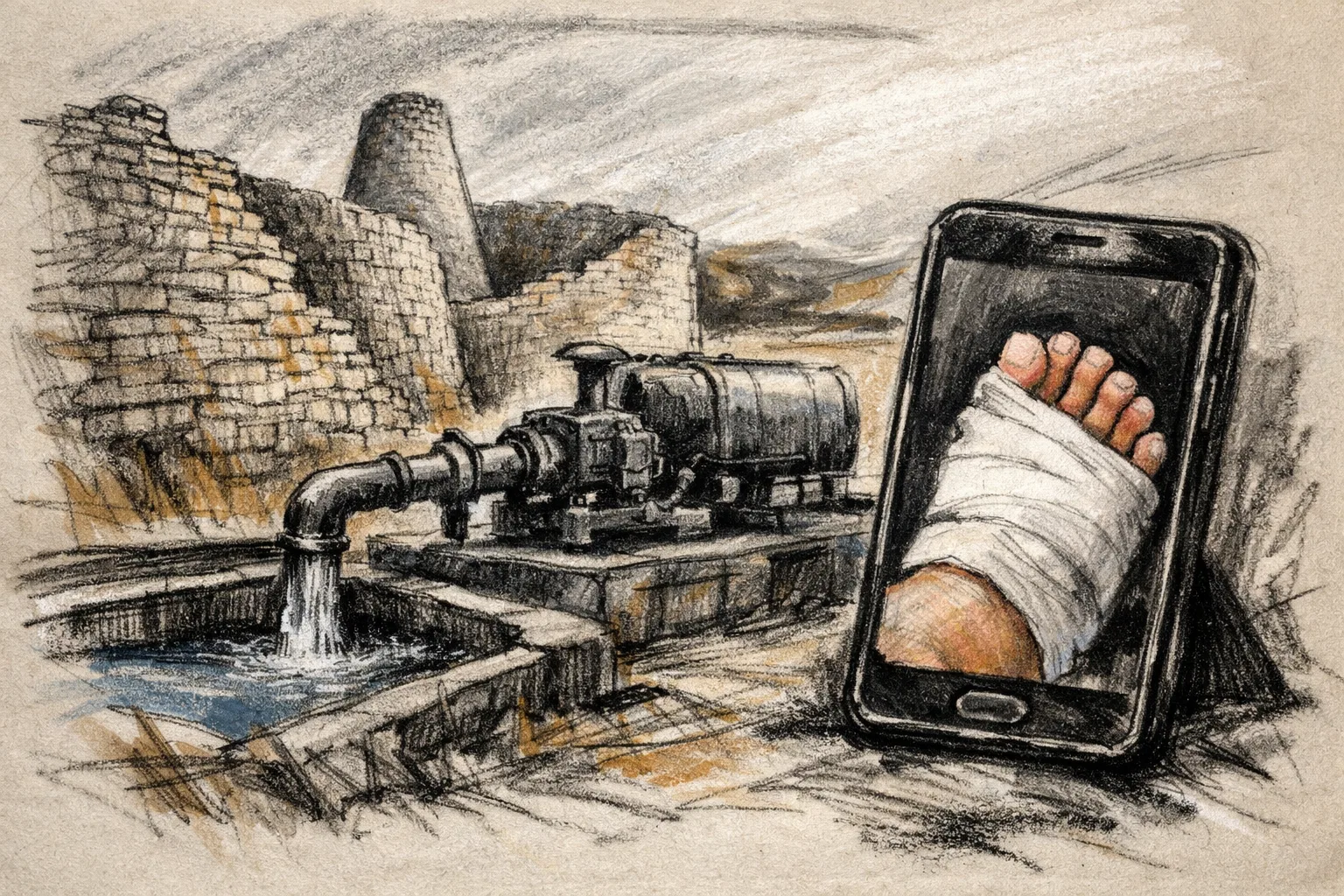
The most consequential debunked claim associated with Zimbabwe concerned the origins of the country’s greatest archaeological site. Great Zimbabwe was a major political and commercial centre constructed and occupied principally between the 11th and 15th centuries. Its monumental dry-stone structures, including the Great Enclosure, were created by the ancestors of Shona-speaking communities and formed part of a wider regional civilisation linked to farming, cattle, craft production and long-distance trade. UNESCO describes the site as a unique testimony to Shona civilisation and an important medieval trading centre.[UNESCO World Heritage Centre]whc.unesco.orgUNESCO World Heritage CentreGreat Zimbabwe National MonumentThe ruins of Great Zimbabwe – the capital of the Queen of Sheba, according to…
European visitors nevertheless promoted increasingly elaborate alternatives. After seeing the ruins in 1871, the German explorer Karl Mauch associated them with the biblical Queen of Sheba and King Solomon. He treated their scale as evidence that local Africans could not have built them and interpreted supposed similarities, imported objects and even a wooden beam through that assumption. Later writers proposed Phoenician, Arab, Jewish or other foreign builders. J. Theodore Bent, whose 1891 expedition received support connected to Cecil Rhodes, argued for a “Semitic” or Arabian commercial population rather than an indigenous African state.[Wikipedia]WikipediaGreat ZimbabweGreat Zimbabwe
These theories were not hoaxes in the narrow sense of a single forged object planted to fool investigators. Some promoters may have sincerely believed them. Yet the resulting narrative operated as a sustained pseudoarchaeological deception because contrary evidence was discounted while speculative claims were presented as history. The theory also served clear colonial interests. If Africans were portrayed as incapable of creating the ruins, European occupation could be cast as the return of civilisation rather than the seizure of land from societies with their own histories of state formation and trade.
The story was persuasive partly because genuine imported goods were found at the site. Chinese ceramics, Persian wares, glass beads and other foreign objects demonstrated trade, but colonial interpreters often treated them as proof of foreign settlement or construction. Archaeology eventually showed the more ordinary and historically important explanation: Great Zimbabwe was an African centre participating in extensive commercial networks, not an overseas colony built by mysterious outsiders.[Archaeology Magazine]archive.archaeology.orgMagazine Riddle of Great ZimbabweArchaeology MagazineRiddle of Great Zimbabwe - Archaeology Magazine ArchiveDavid Randall-MacIver and Gertrude Caton-Thompson early in thi…
Scientific excavation steadily dismantled the foreign-builder story. David Randall-MacIver’s work in 1905 and 1906 found material consistent with a medieval African settlement and rejected the proposed ancient Phoenician origin. Gertrude Caton-Thompson’s excavations in 1929 reached the same central conclusion using stratigraphic investigation: the structures and their associated material culture belonged to an indigenous African society of the medieval period. Later dating, pottery studies and regional comparisons strengthened that interpretation.[archaeology.org]archive.archaeology.orgMagazine Riddle of Great ZimbabweArchaeology MagazineRiddle of Great Zimbabwe - Archaeology Magazine ArchiveDavid Randall-MacIver and Gertrude Caton-Thompson early in thi…
Debunking did not immediately end the myth. In Rhodesia, interpretations supporting African authorship threatened the political assumptions of white minority rule. Researchers who challenged the preferred account faced institutional pressure, while museums and official narratives continued to separate the ruins from the history of living African communities. The problem was therefore not merely that early investigators made a mistake. Evidence was filtered through a system that rewarded one conclusion and made another politically inconvenient.[Wikipedia]WikipediaGreat ZimbabweGreat Zimbabwe
The afterlife of the Queen of Sheba story illustrates why debunked legends endure. It offers famous biblical figures, lost gold and an apparently mysterious stone city, while the real explanation requires attention to settlement patterns, ceramics, trade and social organisation. The invented version is simpler and more romantic. It still appears in tourism, popular mystery writing and pseudoarchaeological discussions, even though the central question of African construction has long been settled.
When mermaids stopped the pumps
In 2012, Zimbabwe became the subject of international headlines claiming that mermaids had driven government workers away from reservoir or dam projects. The episode followed a parliamentary discussion involving Water Resources Minister Samuel Sipepa Nkomo. Reports said workers at sites near Gokwe and Mutare were afraid to continue because they believed supernatural beings were present, and that traditional leaders or ceremonies might be needed before work resumed.[Voice of America]voazimbabwe.comVoice of America'Mermaid' Sightings in Zimbabwe Spark Debate OverVoice of America'Mermaid' Sightings in Zimbabwe Spark Debate Over
The story was widely retold as though a government minister had officially confirmed the existence of mermaids. That was misleading. Nkomo later disputed the way his remarks had been presented, saying he had reported what frightened workers believed rather than endorsing the belief himself. This distinction largely disappeared as the story travelled through foreign newspapers, radio programmes, blogs and paranormal websites.[ZimEye]zimeye.netZim Eye I do not believe in Mermaids at all- MinisterZim Eye I do not believe in Mermaids at all- Minister
The case is therefore better understood as an example of sensational amplification than as a proven organised hoax. There is no firm evidence that an identifiable trickster fabricated sightings, planted physical evidence or deliberately staged an encounter. It is possible that workers sincerely interpreted equipment trouble, unfamiliar water conditions, fear or local stories through a supernatural framework. It is also possible that “mermaids” became a convenient explanation for reluctance to work under difficult conditions. The available reporting does not establish which individuals believed what.
What can be traced is the transformation of an ambiguous labour and belief dispute into an exotic tale for outside audiences. International coverage frequently treated Zimbabwean spiritual traditions as comic curiosities and blurred the difference between reporting a belief and validating a creature. Later retellings added details or presented ritual responses as proof that the original claim was accepted as fact.[The World from PRX]theworld.orgzimbabwe mermaids appeased traditional beer ritualzimbabwe mermaids appeased traditional beer ritual
The episode matters because it demonstrates how folklore can be made to resemble fraud without anyone necessarily committing fraud. A worker’s statement, a minister’s account of that statement and a headline announcing “mermaids stop construction” are three different things. Once stripped of those distinctions, the most dramatic version becomes the one preserved online.
The toes-for-cash hoax
A much clearer digital hoax erupted in May and June 2022. Social-media posts claimed Zimbabweans were amputating and selling their toes for tens of thousands of US dollars. Prices were supposedly determined by toe size, with some versions offering as much as US$40,000 for a large toe. Photographs of injured or bandaged feet and comic videos appeared alongside the claims, giving an absurd story a thin layer of visual credibility.[AFP Fact Check]factcheck.afp.comOpen source on afp.com.
The rumour appears to have grown from jokes and staged content circulating around Harare’s Ximex Mall, an informal trading area. Online users then detached images and videos from their original context. Reposts framed the material as evidence of a real market in body parts, and versions of the claim spread beyond Zimbabwe into Ghana, Nigeria and other countries. Automatic translations and copied captions helped the tale cross linguistic and national boundaries.[AFP Fact Check]factcheck.afp.comOpen source on afp.com.
Journalists and fact-checkers found no amputees who had sold toes, no credible buyers and no medical or police evidence of an organised trade. Zimbabwean police and government representatives publicly rejected the allegation. Reporters visiting the supposed centre of the trade encountered vendors angered that the story had portrayed them as participants in mutilation and criminal commerce.[afp.com]factcheck.afp.comOpen source on afp.com.
The hoax succeeded because it attached grotesque imagery to genuine economic hardship. Zimbabwe was experiencing sharp price rises and widespread insecurity, so a story about people taking desperate measures sounded like an extreme extension of familiar conditions. International coverage sometimes used the tale as a ready-made symbol of economic collapse, allowing the allegation to reinforce an existing narrative before its factual basis had been checked. An Associated Press report noted that the rumour gained attention against a backdrop of inflation above 130 per cent, even as officials and fact-checkers declared it false.[KSAT]ksat.comToes-for-cash hoax reflects Zimbabwe fears of soaring pricesToes-for-cash hoax reflects Zimbabwe fears of soaring prices
The supposed price list was another effective device. Precise numbers often make an invented claim feel researched, even when no source is supplied. Images added emotional force, but they did not show that the injuries occurred in Zimbabwe or had anything to do with selling toes. The episode is a useful example of “context fraud”: material may be real, staged or unrelated, yet becomes deceptive when paired with a false explanation.
It also shows how corrections struggle to catch up. The original claim could be repeated in a sentence or meme; disproving it required reporters to visit the location, question police, search for victims and trace recycled images. By the time detailed checks appeared, the rumour had already become a joke, a news story and a supposed fact in several countries.
Political fakery in encrypted networks
Zimbabwe’s elections have produced a different category of falsehood: fabricated announcements, doctored pictures, recycled violence images and misleading claims about voting procedures or results. These are not all part of one hoax, and the people distributing them may have different motives. Some material is partisan propaganda; some is opportunistic engagement bait; some is inaccurate information passed on by users who believe it.
During the 2018 election, fact-checkers monitored false reports circulating during the first presidential contest after Robert Mugabe’s removal from office. By the 2023 election, misinformation had become particularly difficult to track because much of it moved through WhatsApp rather than through fully public platforms. Encrypted group messages can spread rapidly among trusted contacts while remaining largely invisible to journalists outside those groups.[International Center for Journalists]icfj.orgOpen source on icfj.org.
One recurring method is to reuse an authentic photograph from another country, year or event and claim that it depicts current violence in Zimbabwe. Local fact-checkers documented images circulated during the 2023 election period that did not show the alleged Zimbabwean incident. Such posts exploit the authority of photography: viewers may question a written claim but assume that a disturbing picture must record the event described in its caption.[FactCheckZW]factcheckzw.orgOpen source on factcheckzw.org.
The political environment makes rapid verification difficult. Allegations of intimidation and electoral malpractice cannot simply be dismissed because some accompanying images are false; Zimbabwe has genuine disputes about political violence, media freedom and election administration. Fabricators benefit from that uncertainty. They place invented evidence beside real grievances, making a false post plausible while also making careless debunking dangerous.
Researchers and media trainers in Zimbabwe have consequently stressed the difference between misinformation, which can be shared by mistake, and disinformation, which is knowingly distributed to deceive. Media-literacy projects have encouraged users to inspect dates, search for earlier appearances of photographs and check whether a claim has been reported by independent outlets.[Context News]context.newsNews Zimbabwe fights fake news with lessons in spottingNews Zimbabwe fights fake news with lessons in spotting
These measures help, but they do not remove the structural advantage enjoyed by a compelling fake. A rumour delivered by a relative or trusted group member may feel more credible than a later correction from an unfamiliar institution. Closed networks also prevent fact-checkers from seeing every version of a claim. The deception is therefore not only in the forged image or invented message; it also lies in exploiting trust within private communication.
How Zimbabwean hoaxes gain credibility
The best-known cases differ in scale and intent, but several recurring features explain why they spread.
They confirm an existing prejudice or fear. Colonial theories about Great Zimbabwe agreed with racial assumptions about African incapacity. The toe rumour matched expectations of severe economic desperation. Election fakes draw strength from genuine political mistrust.
They offer a vivid object or image. Monumental walls, supposed biblical timber, photographs of damaged feet and recycled pictures of violence all make stories feel tangible. Yet an image proves only what it actually depicts, not the caption, date or interpretation attached to it.
Authority is selectively borrowed. Explorers cited scholarly societies; mermaid reports invoked a minister and parliamentary proceedings; online rumours cited unnamed doctors, buyers or officials. A real institution or person can be used to lend authority to a claim they never endorsed.
Corrections are more complicated than claims. “People are selling toes” is instantly understood. Explaining where the pictures originated, what police found and why the economic context mattered takes longer. The Great Zimbabwe myth survived for decades partly because archaeological rebuttal was detailed, while the fantasy of a lost foreign civilisation was memorable and politically convenient.
Debunking does not settle every surrounding question. Establishing that Africans built Great Zimbabwe does not answer every question about the site’s political organisation or eventual transformation. Rejecting literal mermaids does not explain precisely why particular workers refused to continue. Showing that a photograph is miscaptioned does not prove that no violence occurred. Strong scepticism separates the disproved claim from the wider issue rather than pretending that one correction resolves everything.

What these stories reveal
Zimbabwe’s most revealing deception history concerns the management of credibility. Under colonial rule, speculative foreign-origin theories were elevated above African knowledge and archaeological evidence because they supported the political order. In the internet era, authority is less centralised, but attention itself has become a reward. A shocking post can acquire international reach before anybody establishes who created it or whether its pictures belong to the story.
The Great Zimbabwe controversy also reverses the familiar image of a hoaxer deceiving experts. Here, increasingly reliable evidence was available, but powerful institutions resisted its implications. The central falsehood survived not because the ruins were impossible to investigate, but because acknowledging their African origin challenged a convenient ideology.
The mermaid episode warns against labelling every extraordinary belief a deliberate fraud. Folklore, fear, workplace conflict and sensational journalism can combine to produce a false public impression without a single mastermind. The toe story, by contrast, displays the recognisable machinery of an online hoax: staged humour, recycled images, invented prices, economic stereotypes and rapid cross-border copying.
For readers, the practical lesson is to ask not only whether a claim sounds strange, but how its evidence was connected to it. Who first made the allegation? Does the photograph show the claimed place and date? Is an official being quoted directly, or merely describing what someone else believes? What would the promoter gain from the story? Zimbabwe’s cases repeatedly show that the decisive deception often lies not in fabricating every component, but in arranging real places, real anxieties and unrelated images into a persuasive false narrative.
Amazon book picks
Further Reading
Books and field guides related to Which Zimbabwean Hoaxes Refused to Disappear?. Use these as the next step if you want deeper reading beyond the article.
Mistakes Were Made (but Not by Me)
Shows how people defend beliefs and narratives after they have been disproved.
The Demon-Haunted World
Rating: 4.5/5 from 43 Google Books ratings
Explains why hoaxes, rumors and pseudoscience persist despite contrary evidence.
Africa
Provides historical context for colonial narratives and misconceptions about African civilizations.
eBay marketplace picks
Marketplace Samples
Live-tested eBay searches with available results related to this page.

Endnotes
1.
Source: whc.unesco.org
Link:https://whc.unesco.org/en/list/364/
Source snippet
UNESCO World Heritage CentreGreat Zimbabwe National MonumentThe ruins of Great Zimbabwe – the capital of the Queen of Sheba, according to...
2.
Source: unesdoc.unesco.org
Link:https://unesdoc.unesco.org/ark%3A/48223/pf0000390400
Source snippet
UNESCO DocumentsGreat Zimbabwe National Monument World Heritage siteArchaeologists who have recovered evidence of plant and animal exploi...
3.
Source: Wikipedia
Title: Great Zimbabwe
Link:https://en.wikipedia.org/wiki/Great_Zimbabwe
4.
Source: archive.archaeology.org
Title: Magazine Riddle of Great Zimbabwe
Link:https://archive.archaeology.org/9807/abstracts/africa.html
Source snippet
Archaeology MagazineRiddle of Great Zimbabwe - Archaeology Magazine ArchiveDavid Randall-MacIver and Gertrude Caton-Thompson early in thi...
5.
Source: zimeye.net
Title: Zim Eye I do not believe in Mermaids at all- Minister
Link:https://www.zimeye.net/2012/01/31/i-do-not-believe-in-mermaids-minister/
6.
Source: theworld.org
Title: zimbabwe mermaids appeased traditional beer ritual
Link:https://theworld.org/stories/2017/05/13/zimbabwe-mermaids-appeased-traditional-beer-ritual
7.
Source: factcheck.afp.com
Link:https://factcheck.afp.com/doc.afp.com.32C23FF
8.
Source: ksat.com
Title: Toes-for-cash hoax reflects Zimbabwe fears of soaring prices
Link:https://www.ksat.com/business/2022/06/10/zimbabweans-count-their-toes-as-inflation-soars-above-130/
9.
Source: factcheck.afp.com
Link:https://factcheck.afp.com/doc.afp.com.33QL94Q
10.
Source: factcheckzw.org
Link:https://factcheckzw.org/tag/fake-pictures/
11.
Source: context.news
Title: News Zimbabwe fights fake news with lessons in spotting
Link:https://www.context.news/big-tech/zimbabwe-fights-fake-news-with-lessons-in-spotting-disinformation
12.
Source: Wikipedia
Title: Gertrude Caton Thompson
Link:https://en.wikipedia.org/wiki/Gertrude_Caton_Thompson
13.
Source: Wikipedia
Title: David Randall Mac Iver
Link:https://en.wikipedia.org/wiki/David_Randall-MacIver
14.
Source: youtube.com
Title: Great Zimbabwe and the Lie That Took 137 Years to Unravel
Link:https://www.youtube.com/watch?v=PYbxZJHDf6Q
Source snippet
Great Zimbabwe - The Lost City of Gold (History Documentary)...
15.
Source: youtube.com
Title: Great Zimbabwe
Link:https://www.youtube.com/watch?v=lRzsceSgTrQ
Source snippet
The Lost City of Great Zimbabwe | Archaeology | Episode 4...
16.
Source: johnhawks.net
Title: gertrude caton thompson within the history of archaeology in africa
Link:https://www.johnhawks.net/p/gertrude-caton-thompson-within-the-history-of-archaeology-in-africa
Source snippet
John HawksGertrude Caton Thompson within the history of...7 Sept 2009 — Her excavations showed that the site of Great Zimbabwe is mediev...
17.
Source: voazimbabwe.com
Title: Voice of America’Mermaid’ Sightings in Zimbabwe Spark Debate Over
Link:https://www.voazimbabwe.com/a/zimbabwe-mermaids-problem-for-water-minister-138664059/1467126.html
18.
Source: thefourthestategh.com
Title: fact check no evidence for viral claim of toes for cash in zimbabwe
Link:https://thefourthestategh.com/2022/06/fact-check-no-evidence-for-viral-claim-of-toes-for-cash-in-zimbabwe/
19.
Source: icfj.org
Link:https://www.icfj.org/news/fact-checking-zimbabwes-election-how-online-misinformation-was-tracked-during-zimbabwes-long
20.
Source: facebook.com
Link:https://www.facebook.com/groups/2077090212683898/posts/2493060964420152/
21.
Source: archive.org
Link:https://archive.org/stream/bub_gb_LaUnOztbkP4C/bub_gb_LaUnOztbkP4C_djvu.txt
22.
Source: education.nationalgeographic.org
Title: great zimbabwe
Link:https://education.nationalgeographic.org/resource/great-zimbabwe/
Additional References
23.
Source: thebritishacademy.ac.uk
Link:https://www.thebritishacademy.ac.uk/documents/1253/71p523.pdf
Source snippet
The British Academygertrude caton thompsonZimbabwe and its associated ruins as products of an efflorescence of native African culture und...
24.
Source: zimfieldguide.com
Link:https://zimfieldguide.com/masvingo/controversy-early-20th-century-over-whether-stone-structures-zimbabwe-were-old-and-built
Source snippet
Zimbabwe Field GuideThe controversy in the early 20th Century over whether...By 1892 he had concluded that the builders of Great Zimbabw...
25.
Source: youtube.com
Title: The Lost City of Great Zimbabwe | Archaeology | Episode 4
Link:https://www.youtube.com/watch?v=8hVNqEkvpQw
Source snippet
What's happening in Zimbabwe is crāzy! People are Selling their Toes for $40000...
26.
Source: youtube.com
Title: Who built Great Zimbabwe? And why?
Link:https://www.youtube.com/watch?v=quzjmZ-7s6w
Source snippet
Great Zimbabwe and the Lie That Took 137 Years to Unravel...
27.
Source: academia.edu
Link:https://www.academia.edu/25603004/who_built_the_great_zimbabwe
28.
Source: researchgate.net
Link:https://www.researchgate.net/publication/287608347_Great_Zimbabwe_in_Historical_Archaeology_Reconceptualizing_Decline_Abandonment_and_Reoccupation_of_an_Ancient_Polity_AD
29.
Source: researchgate.net
Link:https://www.researchgate.net/publication/398903611_Political_disinformation_during_Zimbabwe%27s_2023_harmonised_elections_Political_disinformation_during_Zimbabwe%27s_2023_harmonised_elections
30.
Source: instagram.com
Link:https://www.instagram.com/p/DWl4Sb7DE4o/
31.
Source: fraudinvestigation.net
Link:https://www.fraudinvestigation.net/crypto-romance-scams
32.
Source: facebook.com
Link:https://www.facebook.com/groups/149844915349213/posts/2386811251652557/
Topic Tree
Follow this branch
Related pages 192
- Albanian Hoaxes
- Algerian Hoaxes
- Antigua Deceptions
- Argentina Hoaxes
- Armenian Hoaxes
- +187 more in sidebar