Within Israel Hoaxes
Were the Shapira Manuscripts Judged Too Soon?
The lost Deuteronomy strips remain disputed because their disappearance prevents modern testing and leaves rival readings of old records.
On this page
- How the Deuteronomy strips reached London
- Why scholars rejected the manuscripts
- Why the case revived after the Dead Sea Scrolls
Page outline Jump by section
Introduction
The Shapira Manuscripts are one of the strangest episodes in the history of biblical archaeology: a manuscript denounced as a forgery in 1883, apparently lost forever, and then partially rehabilitated more than a century later. The case centres on fifteen leather strips presented in London by the Jerusalem antiquities dealer Moses Wilhelm Shapira. The text appeared to preserve an unfamiliar version of Deuteronomy, one of the books of the Hebrew Bible. Contemporary scholars dismissed the manuscripts as fraudulent, the British Museum refused to buy them, and Shapira’s reputation collapsed. Yet the disappearance of the original strips has left the verdict permanently open to challenge. After the discovery of the genuine Dead Sea Scrolls in the twentieth century, some researchers began asking whether the manuscripts had been judged too quickly.[Wikipedia]WikipediaShapira ScrollShapira Scroll

The result is not a solved mystery but a rare case in which a famous forgery returned from the historical graveyard. The central question is no longer simply whether Shapira tried to deceive buyers. It is whether nineteenth-century experts may have rejected an unusual manuscript using assumptions later overturned by archaeological discoveries.[Wikipedia]WikipediaShapira ScrollShapira Scroll
How the Deuteronomy strips reached London
In 1883 Shapira arrived in London with what he claimed were ancient leather manuscript strips discovered near the Dead Sea region, in the vicinity of the Wadi Mujib canyon. The strips were written in an archaic Hebrew script and appeared to contain a text related to Deuteronomy. At a time when European museums were competing fiercely for biblical antiquities, the find attracted immediate attention.[Wikipedia]WikipediaShapira ScrollShapira Scroll
Shapira offered the manuscripts to the British Museum for the astonishing sum of £1 million, a figure that reflected both the object’s supposed significance and the intense market for biblical relics. The manuscripts were displayed publicly, discussed in newspapers and examined by leading scholars. The excitement was understandable. If genuine, they would have represented an extraordinarily early biblical manuscript, centuries older than any Hebrew biblical text then known.[Wikipedia]WikipediaShapira ScrollShapira Scroll
The claim also seemed plausible in ways that are easy to overlook today. The manuscripts were said to have come from the Dead Sea region decades before anyone had heard of the Dead Sea Scrolls. The idea that ancient Hebrew texts could survive in desert caves sounded improbable to many nineteenth-century scholars but would later prove entirely possible.[Wikipedia]WikipediaShapira ScrollShapira Scroll
Why scholars rejected the manuscripts
The manuscripts entered London carrying a serious handicap: Shapira’s reputation.
A decade earlier he had been associated with the sale of supposed ancient Moabite artefacts that were later exposed as modern creations. Whether Shapira personally produced the fakes or mainly acted as a dealer remains debated, but his name had become linked with forgery scandals. When the Deuteronomy strips appeared, many scholars approached them with deep suspicion.[ANCIENT JEW REVIEW]ancientjewreview.comthe myth of moses shapiraANCIENT JEW REVIEWThe Myth of Moses ShapiraSep 1, 2021 — Good fakes are often not detected for decades, fooling all the experts in the me…
Several factors led experts to reject the manuscripts:
- The script appeared inconsistent with expectations about ancient Hebrew writing.
- Certain textual features seemed suspiciously dependent on the biblical book of Deuteronomy.
- Physical details of the strips looked unusual.
- The provenance relied heavily on dealer testimony rather than controlled excavation.[Wikipedia]WikipediaShapira ScrollShapira Scroll
The British Museum assigned the respected scholar Christian David Ginsburg to investigate. Within weeks he concluded that the manuscripts were forged. Other specialists agreed, and the institution abandoned any purchase plans. Contemporary reports indicate that museum officials believed parts of the leather looked genuinely old while other features appeared suspiciously recent.[Wikipedia]WikipediaShapira ScrollShapira Scroll
The speed of the rejection was striking. By late summer 1883 the scholarly consensus had largely hardened against authenticity. Shapira’s defence collapsed, and his personal fortunes followed.
The human cost of the verdict
The affair did not end as an academic disagreement.
After the public rejection of the manuscripts, Shapira left England under a cloud of humiliation. In March 1884 he was found dead in a Rotterdam hotel, widely believed to have taken his own life. The scandal became inseparable from his biography, and for generations the manuscripts were remembered mainly as an embarrassing forgery.[themosesscroll.com]themosesscroll.com8 march a date of death and disappearance8 march a date of death and disappearance
The manuscripts themselves then followed an equally mysterious path. They passed through auctions and private hands, including a Sotheby’s sale in 1885. After the late nineteenth century, their trail effectively vanished. No verified trace of the original strips has been found.[The Appendix]theappendix.netThe AppendixA Nineteenth-Century Dead Sea Scroll - The Appendix11 Sept 2014 — As for the manuscript itself: Shapira had left it with the…
That disappearance would become crucial. Because the manuscripts cannot be tested using modern scientific methods, every later debate must rely on photographs, transcriptions, drawings and nineteenth-century descriptions rather than the objects themselves.[Wikipedia]WikipediaShapira ScrollShapira Scroll
Why the case revived after the Dead Sea Scrolls
The discovery of the Dead Sea Scrolls after 1947 transformed the historical landscape.
Suddenly, several assumptions that had helped condemn the Shapira manuscripts looked less certain. Ancient biblical manuscripts really had survived in caves near the Dead Sea. Ancient Hebrew texts sometimes differed significantly from later standard versions. Scribal practices once thought unlikely turned out to have historical precedents.[TUSCULUM UNIVERSITY]site.tusculum.eduTUSCULUM UNIVERSITYThe Shapira StripsGiven that one of the reasons why the Shapira fragments were originally judged to be a forgery was t…
These discoveries did not prove Shapira’s manuscripts genuine. They did, however, remove some of the reasons earlier scholars had found the claim implausible.
As a result, a minority of researchers began reopening the case. Periodic defences appeared throughout the twentieth century, but the most significant revival arrived in the 2020s. Biblical scholar Idan Dershowitz argued that the text preserved in nineteenth-century copies was not a fake version of Deuteronomy but an ancient work that may predate the biblical book itself. He published a detailed reconstruction under the title The Valediction of Moses.[Monash University]research.monash.eduthe valediction of moses a proto biblical bookthe valediction of moses a proto biblical book
The argument attracted international attention because it reframed the question. Instead of asking whether the manuscripts copied Deuteronomy badly, Dershowitz suggested they represented a different textual tradition altogether.[Monash University]research.monash.eduthe valediction of moses a proto biblical bookthe valediction of moses a proto biblical book

Why many scholars still reject authenticity
The modern revival has not produced a scholarly consensus.
Critics argue that the manuscripts continue to display characteristics expected of a nineteenth-century forgery. They point to unusual spellings, problematic letter forms, linguistic issues and the suspicious antiquities-market context in which the manuscripts emerged. Some researchers maintain that the text appears too dependent on known biblical material and that the forgery explanation remains simpler than the authenticity hypothesis.[biblicalarchaeology.org]biblicalarchaeology.orgthe shapira scrolls authentic or forgedthe shapira scrolls authentic or forged
Supporters counter that some supposedly suspicious features now look less unusual in light of later discoveries and that nineteenth-century scholars may have underestimated the diversity of ancient Hebrew textual traditions. They also note that certain physical characteristics criticised in 1883 resemble features seen in authentic Dead Sea Scroll manuscripts.[tusculum.edu]site.tusculum.eduTUSCULUM UNIVERSITYThe Shapira StripsGiven that one of the reasons why the Shapira fragments were originally judged to be a forgery was t…
The debate remains unusually difficult to resolve because both sides are arguing from incomplete evidence. The original artefacts—the one source capable of providing decisive laboratory testing—are missing.

What makes the Shapira affair different from most forgeries
Most exposed forgeries eventually become historical curiosities. The Shapira manuscripts are different because the disappearance of the evidence prevents a final verdict.
If the strips were rediscovered today, researchers could examine the leather, ink, stitching, manufacture and age using techniques unavailable in 1883. Carbon dating, multispectral imaging and modern palaeography might settle questions that Victorian scholars could only debate. Instead, investigators are forced to reconstruct the case from photographs, sketches, letters and published descriptions.[Wikipedia]WikipediaShapira ScrollShapira Scroll
This uncertainty explains why the story continues to circulate. It sits on the boundary between forgery history and archaeological mystery. The nineteenth-century consensus declared the manuscripts fake. The twentieth century produced discoveries that made parts of that judgement look less secure. The twenty-first century has reopened the debate without providing the lost objects needed to close it again.[biblicalarchaeology.org]biblicalarchaeology.orgBiblical Archaeology SocietyThe Shapira Fragments… Forgery Actually the Oldest Known Biblical Manuscript?” A Bit of… Tags: 19th cent…
The wider consequences of Shapira Scrolls
For the history of Israel’s antiquities trade, the Shapira affair is a cautionary tale about provenance, reputation and the dangers of both credulity and overconfidence. It shows how difficult it can be to judge extraordinary discoveries that arrive through commercial channels rather than controlled excavation.[ANCIENT JEW REVIEW]ancientjewreview.comthe myth of moses shapiraANCIENT JEW REVIEWThe Myth of Moses ShapiraSep 1, 2021 — Good fakes are often not detected for decades, fooling all the experts in the me…
It also demonstrates that exposure is not always the end of a forgery story. Sometimes new evidence changes the context in which an old verdict was reached. The Dead Sea Scrolls did not authenticate the Shapira manuscripts, but they forced later generations to reconsider whether nineteenth-century scholars had all the information they needed.[Biblical Archaeology Society]biblicalarchaeology.orgBiblical Archaeology SocietyThe Shapira Fragments… Forgery Actually the Oldest Known Biblical Manuscript?” A Bit of… Tags: 19th cent…
More than 140 years after the manuscripts reached London, the central puzzle remains unresolved. Were the Shapira manuscripts a remarkably ambitious forgery, or were they an authentic ancient text rejected before scholarship was ready to understand it? The missing strips ensure that the question remains one of the most enduring controversies in the history of biblical manuscripts.[wikipedia.org]WikipediaShapira ScrollShapira Scroll
Amazon book picks
Further Reading
Books and field guides related to Were the Shapira Manuscripts Judged Too Soon?. Use these as the next step if you want deeper reading beyond the article.
The Dead Sea Scrolls Today
Essential for understanding why opinions on Shapira later shifted.
The Bible Unearthed
Rating: 3.5/5 from 9 Google Books ratings
Supplies archaeological context relevant to manuscript controversies.
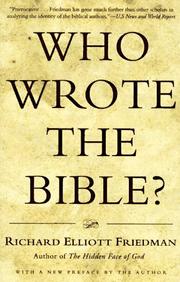
Who Wrote the Bible?
First published 1987. Subjects: Authorship, Bible, Criticism, interpretation, Documentary hypothesis (Pentateuchal criticism), Bible. O.T...
eBay marketplace picks
Marketplace Samples
Live-tested eBay searches with available results related to this page.

Endnotes
1.
Source: Wikipedia
Title: Shapira Scroll
Link:https://en.wikipedia.org/wiki/Shapira_Scroll
2.
Source: site.tusculum.edu
Link:https://site.tusculum.edu/reference/the-shapira-strips/
Source snippet
TUSCULUM UNIVERSITYThe Shapira StripsGiven that one of the reasons why the Shapira fragments were originally judged to be a forgery was t...
3.
Source: ancientjewreview.com
Title: the myth of moses shapira
Link:https://www.ancientjewreview.com/read/2021/8/31/the-myth-of-moses-shapira
Source snippet
ANCIENT JEW REVIEWThe Myth of Moses ShapiraSep 1, 2021 — Good fakes are often not detected for decades, fooling all the experts in the me...
4.
Source: themosesscroll.com
Title: 8 march a date of death and disappearance
Link:https://themosesscroll.com/8-march-a-date-of-death-and-disappearance/
5.
Source: research.monash.edu
Title: the valediction of moses a proto biblical book
Link:https://research.monash.edu/en/publications/the-valediction-of-moses-a-proto-biblical-book/
6.
Source: Wikipedia
Link:https://en.wikipedia.org/wiki/Moses
7.
Source: themosesscroll.com
Link:https://themosesscroll.com/
8.
Source: themosesscroll.com
Link:https://themosesscroll.com/the-sad-business-of-the-moabite-pottery-a-letter-of-explanation-monday-6-august-1883/
Published: august 1883
9.
Source: themosesscroll.com
Title: for scholars to decide a review of the valediction of moses
Link:https://themosesscroll.com/for-scholars-to-decide-a-review-of-the-valediction-of-moses/
10.
Source: dershowitz.net
Title: The Valediction of Moses
Link:https://dershowitz.net/assets/documents/idan-dershowitz-valediction-of-moses-a-proto-biblical-book.pdf
11.
Source: biblicalarchaeology.org
Link:https://www.biblicalarchaeology.org/daily/the-shapira-fragments/
Source snippet
Biblical Archaeology SocietyThe Shapira Fragments... Forgery Actually the Oldest Known Biblical Manuscript?” A Bit of... Tags: 19th cent...
12.
Source: theappendix.net
Link:https://theappendix.net/issues/2014/7/the-lying-pen-of-the-scribes-a-nineteenth-century-dead-sea-scroll
Source snippet
The AppendixA Nineteenth-Century Dead Sea Scroll - The Appendix11 Sept 2014 — As for the manuscript itself: Shapira had left it with the...
13.
Source: rollstonepigraphy.com
Link:https://www.rollstonepigraphy.com/?p=896
Source snippet
Shapira Forgeries is very heavily dependent on the book of Deuteronomy.... Shapira having invented the text or participated in the manus...
14.
Source: library.biblicalarchaeology.org
Title: The BAS Library The Shapira Scrolls: The Case for Authenticity
Link:https://library.biblicalarchaeology.org/article/the-shapira-scrolls-the-case-for-authenticity/
15.
Source: biblicalarchaeology.org
Title: the shapira scrolls authentic or forged
Link:https://www.biblicalarchaeology.org/daily/biblical-topics/hebrew-bible/the-shapira-scrolls-authentic-or-forged/
16.
Source: manuscripthunters.gwi.uni-muenchen.de
Link:https://www.manuscripthunters.gwi.uni-muenchen.de/index.php/shapira/
17.
Source: ehrmanblog.org
Title: the valediction of moses
Link:https://ehrmanblog.org/forum/the-hebrew-bible/the-valediction-of-moses/
18.
Source: monash.academia.edu
Title: Idan Dershowitz
Link:https://monash.academia.edu/IdanDershowitz
Additional References
19.
Source: biblearchaeology.org
Title: shapira strips purported fragments of deuteronomy in the news again
Link:https://biblearchaeology.org/shapira-strips-purported-fragments-of-deuteronomy-in-the-news-again/
Source snippet
Moabite Pottery Forgeries and the Moabite Stone Forgeries.... (Another scholar has noted that, in 1883, Shapira sold a forged leather ma...
20.
Source: youtube.com
Title: The Lost Bible Scroll… Real or One of History’s Biggest Fakes? | Dr. Joel Baden
Link:https://www.youtube.com/watch?v=Iso7fS-dHrA
Source snippet
The Lost Ten Commandments? The Shapira Scroll Mystery | Ross K. Nichols...
21.
Source: youtube.com
Title: The Lost Ten Commandments? The Shapira Scroll Mystery | Ross K. Nichols
Link:https://www.youtube.com/watch?v=NQud772AkpE
Source snippet
The Shapira Strips: What Are They and Are They Forgeries?...
22.
Source: researchgate.net
Link:https://www.researchgate.net/publication/315138463_The_Shapira_Scroll_was_an_Authentic_Dead_Sea_Scroll
Source snippet
ResearchGate(PDF) The Shapira Scroll was an Authentic Dead Sea Scroll15 Mar 2017 — On the following day, Ginsburg wrote to Bond, the dire...
23.
Source: youtube.com
Title: The Shapira Strips: What Are They and Are They Forgeries?
Link:https://www.youtube.com/watch?v=FYgqnlQXWjA
Source snippet
The Shapira Scroll: The First Dead Sea Scroll...
24.
Source: davidholahan.com
Link:https://davidholahan.com/bookreviews/an-ancient-mystery
25.
Source: academia.edu
Link:https://www.academia.edu/49204091/A_Fresh_Assessment_of_Moses_Shapiras_Manuscript_Collecting_Activities_Discoveries_and_Sales_PPT
26.
Source: reddit.com
Link:https://www.reddit.com/r/AcademicBiblical/comments/1cqikne/how_widely_accepted_or_not_are_idan_dershowitzs/
27.
Source: reddit.com
Link:https://www.reddit.com/r/AskBibleScholars/comments/q3fr9t/is_the_the_valediction_of_moses_shapiras/
28.
Source: jamestabor.com
Link:https://jamestabor.com/a-shapira-bombshell-has-just-exploded-idan-dershowitzs-research-and-the-case-for-authenticity/
Topic Tree