When Philippine Legends Became Accepted as Fact
The Philippines has produced several unusually durable stories about forged laws, hidden treasure, untouched tribes and heroic wartime exploits. Some were deliberate frauds. Others began as exaggerations, propaganda or sincere errors and were later repeated so confidently that they acquired the appearance of established fact.
Page outline Jump by section
Introduction
The clearest cases reveal a common pattern. A claim answered a public desire — for an ancient legal tradition, a dramatic scientific discovery, a national inventor, a war hero or fabulous lost wealth. It then gained authority through newspapers, textbooks, government recognition, foreign experts or political publicity. By the time researchers examined the original documents, chronology or physical evidence, the story had often become part of popular memory. Even a decisive exposure did not guarantee its disappearance.
The forged law that became official history
The Code of Kalantiaw is probably the most important historical forgery associated with the Philippines because it travelled far beyond private antiquarian circles. It was presented as a pre-colonial legal code issued in 1433 by a ruler named Kalantiaw. Its severe punishments gave readers an apparently vivid glimpse of an organised legal society before Spanish rule.
The story originated in material supplied by José E. Marco, an antiquarian and prolific producer of questionable manuscripts. Marco attributed the code to an old source, but no independently verifiable early copy existed. Historian William Henry Scott later traced the supposed documentary chain and concluded that the code was a modern fabrication rather than a surviving pre-colonial text. Other historians accepted the substance of Scott’s findings, and the National Historical Institute formally declared the code to have no valid historical basis.[inquirer.net]opinion.inquirer.netbibliographic ghostsInquirer OpinionDecember 17, 2014 — 17 Dec 2014 — In 1968 William Henry Scott focused the spotlight on Marco's handiwork, Kalantiaw and h…
What makes the episode remarkable is not merely that a forged document fooled some readers. The invented law received the backing of institutions. In 1957, an executive order described Kalantiaw as the “first Filipino Lawgiver” and recognised property associated with a shrine in his honour. In 1971, President Ferdinand Marcos created the Order of Kalantiao for distinguished service in law and justice. State recognition therefore helped transform a weakly sourced tale into something that looked officially certified.[Lawphil]lawphil.netExecutive Order No. 234EXECUTIVE ORDER NO. 234,Executive Order No. 234EXECUTIVE ORDER NO. 234, February 11, 1957 ] DECLARING THE MUNICIPAL PROPERTIES UNDER TAX DECLARATION. Datu…
The forgery was persuasive partly because it met an understandable cultural and political need. Colonial histories had often portrayed the pre-Spanish Philippines as lacking sophisticated institutions. A fifteenth-century legal code seemed to offer a compact answer: Filipinos had possessed their own jurisprudence long before European conquest. The national usefulness of the claim made sceptical questions about provenance less welcome.
Scott’s exposure showed why provenance matters. Historians do not establish authenticity simply because a manuscript contains old-fashioned names, dates or punishments. They ask where it came from, whether earlier catalogues mention it, whether its language matches the claimed period and whether independent documents support it. The Kalantiaw material failed that kind of examination.
Yet the code continued to appear in educational and commemorative settings after it had been discredited. Once a story has entered textbooks, ceremonies, monuments and professional honours, correction becomes an institutional task rather than a simple factual announcement. The case remains a warning that official endorsement can preserve a fabrication long after scholarly confidence has collapsed.[opinion.inquirer.net]opinion.inquirer.netbibliographic ghostsInquirer OpinionDecember 17, 2014 — 17 Dec 2014 — In 1968 William Henry Scott focused the spotlight on Marco's handiwork, Kalantiaw and h…

The Tasaday and the “Stone Age” spectacle
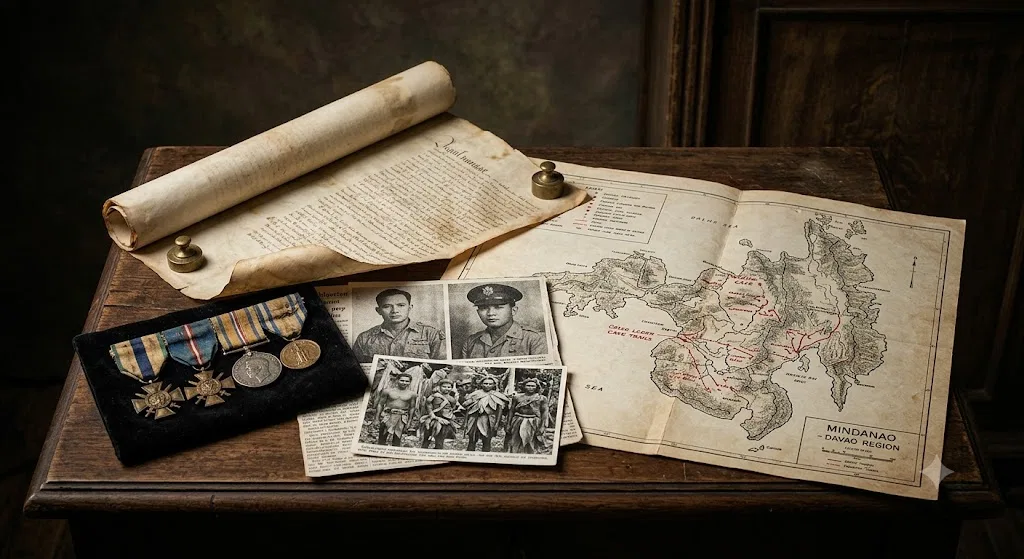
In 1971, the world was introduced to the Tasaday, a small community in the forests of Mindanao. Reports portrayed them as an isolated people living in caves, unfamiliar with agriculture and largely untouched by modern society. Photographs of people wearing leaves and accounts of a peaceful community without words for warfare turned the Tasaday into an international sensation.
The discovery was promoted by Manuel Elizalde Jr, a wealthy official associated with the Presidential Assistance on National Minorities during the Marcos period. Access to the community was tightly controlled, which made independent checking difficult while increasing the value of the few authorised visits. Journalists, photographers and anthropologists were shown a human story that appeared to collapse thousands of years of social development into a single encounter.
After Ferdinand Marcos was removed from power in 1986, visitors reached the area without the same restrictions. Some reported that the cave-dwellers wore ordinary clothing when outsiders were absent and claimed that local people had been instructed to perform a primitive way of life. International coverage rapidly reversed direction: the celebrated discovery was now described as a staged anthropological hoax.[jstor.org]jstor.org5 May 1986): 69; June Kronholz, "Tangled Tale: Saga of 'Lost' Tribe in Philippines Shows Marcos Era's.Read more…
The neat version — that Elizalde simply hired villagers to impersonate an imaginary tribe — is not, however, the full scholarly consensus. Later linguistic and anthropological work found evidence that the Tasaday were a real, distinct community with their own dialect and an unusual forest-based economy. Researchers who reassessed the case concluded that they were neither entirely invented actors nor the timeless, completely isolated “cavemen” first presented to the public.[sil.org]scholars.sil.orgThe Tasaday 'Cave PeopleThe Tasaday 'Cave People
The most defensible conclusion is therefore narrower than either extreme. The people existed, but the media image of a community preserved unchanged from the Stone Age was false or grossly misleading. Their isolation had been overstated, their way of life had been packaged for outsiders, and the conditions under which observations were made were politically controlled.
This distinction matters because calling the entire community a fraud can harm the people who became the objects of the spectacle. The Tasaday controversy involved several layers: genuine local identity, selective presentation, possible performance for visitors, government patronage, anthropological disagreement and an international press eager first for a miracle and then for an exposure. Later research has also examined how the controversy affected Tasaday claims to land and Indigenous recognition.[archium.ateneo.edu]archium.ateneo.eduOpen source on ateneo.edu.
The affair remains one of the best examples of the boundary between hoax and distortion. A false frame can be built around real people. The deception need not consist of inventing every detail; it may instead come from controlling access, suppressing inconvenient context and presenting a changing community as a frozen survival from humanity’s distant past.
Ferdinand Marcos and the manufactured war hero
Ferdinand Marcos genuinely served during the Second World War, including service in Bataan. The disputed part of his record concerns the much grander story he later promoted: that he had been an exceptionally decorated resistance hero and the leader of a large guerrilla organisation called Ang Mga Maharlika.
Investigations of United States military files found that the claimed guerrilla organisation was not recognised. Army reviewers rejected Marcos’s requests for recognition, finding serious problems with the evidence and describing parts of the claim in strongly condemnatory terms. Archival records publicised in the 1980s also contradicted the image of Marcos as the recipient of the extraordinary collection of American decorations associated with his political legend.[cia.gov]cia.govOpen source on cia.gov.
The National Historical Commission of the Philippines later concluded that several medals attributed to Marcos were false or unsupported and that he had not been officially recognised as leader of the supposed Maharlika unit. The important distinction is between wartime service, which occurred, and the subsequent enlargement of that service into a heroic mythology.[Inquirer.net]newsinfo.inquirer.netmarcos military record full of lies says nhcpmarcos military record full of lies says nhcp
The legend was politically valuable. A record of sacrifice and command allowed Marcos to present himself not merely as an ambitious politician but as a tested national saviour. During periods of unrest, the image of the decorated soldier supported his claims to discipline, authority and patriotic legitimacy. When reports challenging that record appeared, he denounced them as attacks by political enemies.[Los Angeles Times]latimes.comLos Angeles Times Marcos Blasts U.S. Reports He Was a Phony War HeroLos Angeles Times Marcos Blasts U.S. Reports He Was a Phony War Hero
This was not a conventional hoax with a single forged object displayed to the public. It was a sustained act of biographical construction. Medals, official biographies, speeches and repeated anecdotes reinforced one another. Each retelling made the others appear more credible, while political power limited the space available for investigation.
The later online rehabilitation of the Marcos period demonstrates how an old propaganda narrative can survive in new media. Studies and fact-checking projects have documented the circulation of misleading claims presenting the dictatorship as a golden age and minimising corruption or human-rights abuses. Research conducted around the 2022 election also found that exposure to corrections could reduce belief in false claims, although it did not necessarily change voting intentions.[saferinternetlab.org]saferinternetlab.orgOpen source on saferinternetlab.org.
The war-hero story therefore connects two eras of deception. It began when authority rested heavily on official biographies, medals and controlled media. It persists in an environment of edited video, nostalgic imagery and rapid social sharing. The technology changed; the underlying method — repetition, emotional symbolism and selective use of records — did not.

Yamashita’s gold and the treasure industry
The legend of Yamashita’s gold holds that Japanese forces concealed enormous quantities of looted bullion, jewels and cultural property in tunnels, caves or underground chambers in the Philippines near the end of the Second World War. The treasure is often associated with General Tomoyuki Yamashita, although versions of the story differ widely about who organised the burial, how much was hidden and who later recovered it.
Japan unquestionably looted occupied territories during the war. That historical reality gives the legend a plausible foundation. The doubtful leap is from documented wartime plunder to claims of vast, precisely located caches protected by elaborate traps and discoverable through secret maps, coded markers or the testimony of ageing witnesses. No publicly verified body of evidence has established the enormous treasure system described in the most extravagant accounts.
The story acquired additional force through the experience of Rogelio Roxas, a Filipino locksmith and treasure hunter who said he had discovered a golden Buddha and bullion near Baguio in 1971. Roxas alleged that men acting for President Marcos seized the find and that he was detained and tortured. Litigation in Hawaii later resulted in major findings against the Marcos estate concerning abuses and property taken from Roxas, although the legal proceedings did not prove every larger claim attached to the Yamashita treasure legend.[ABC News]abc.net.auphilippines imelda marcos and the missing gold statuephilippines imelda marcos and the missing gold statue
That distinction is frequently lost in retellings. Evidence that Roxas possessed something valuable, or that property was wrongfully seized, is not automatically evidence for every story about continent-spanning Japanese treasure networks. Court judgments answer specific legal questions; they do not validate all surrounding folklore.
The legend also supports a continuing commercial ecosystem. Treasure hunters may be sold supposed maps, signs, detectors or access to secret sites. Investors can be asked to finance excavation, security, pumps and heavy equipment, always with the promise that the next chamber will contain the fortune. The costs are immediate and verifiable; the treasure remains just beyond reach.
The physical danger is real. In 2023, five men searching beneath a site in Palawan were rescued after nearly suffocating in a shaft about 30 metres deep. Similar ventures risk collapse, toxic air, unexploded wartime ordnance and damage to archaeological sites.[Philippine News Agency]pna.gov.phOpen source on pna.gov.ph.
Yamashita’s gold endures because it combines several powerful ingredients: genuine wartime looting, missing wealth, dictatorship-era secrecy, dramatic personal testimony and the universal appeal of buried treasure. It is best treated neither as a proven historical cache nor as a completely baseless fantasy. The broad possibility that valuables were hidden during wartime is plausible; the immense, organised treasure empire described by promoters remains unsubstantiated.
The inventor myth of Agapito Flores
A gentler but revealing Philippine legend credits Agapito Flores with inventing the fluorescent lamp and sometimes claims that the English word “fluorescent” was derived from his surname. The story has circulated in school materials, inspirational lists and popular accounts of Filipino ingenuity.
The chronology makes the claim impossible. Experiments involving fluorescence and gas-discharge lighting pre-dated Flores, and practical fluorescent-lamp development emerged from a long international sequence of scientific and industrial work. The word “fluorescence” was already in use in the nineteenth century, long before the supposed invention attributed to him.[ThoughtCo]thoughtco.comThought Co Did Agapito Flores Invent the Fluorescent Lamp?Thought Co Did Agapito Flores Invent the Fluorescent Lamp?
There is also no reliable patent trail or contemporary technical documentation showing that Flores created the lamp. Unlike the Kalantiaw case, this myth does not have a clearly established master forger or an obvious original fraudulent document. It appears closer to an invented national legend: an unsupported claim repeated because it offered an appealing example of overlooked Filipino genius.
That does not mean the story should be dismissed with ridicule. National-invention myths often flourish where people feel that local achievements have been ignored or credited to wealthier countries. The emotional message — that Filipino talent deserves recognition — can be reasonable even when the chosen example is false.
The better response is to separate pride from bad evidence. Correcting the Flores story does not diminish genuine Filipino contributions to medicine, engineering, agriculture, communications and other fields. It protects those achievements from being placed beside a claim that fails a basic chronological check.
Why exposed stories keep returning
These cases survived for different reasons, but they share several mechanisms.
They fulfilled a public wish. Kalantiaw supplied an ancient lawgiver. Flores supplied an ingenious inventor. The Tasaday seemed to offer a living window into the human past. Marcos’s war narrative produced a heroic national leader. Yamashita’s gold promised that immense wealth was still waiting beneath familiar ground.
Authority substituted for verification. Government orders, textbooks, medals, museums, foreign journalists and celebrated experts gave claims a borrowed respectability. Readers rarely have the time or access required to inspect archives, patents or original field notes for themselves.
The first story was more memorable than the correction. A lost tribe or golden tunnel can be explained in one sentence. The correction usually requires distinctions: the Tasaday were real but misrepresented; Marcos served but embellished his record; wartime loot existed but the giant treasure network is unproved.
Institutions changed slowly. Once a claim entered curricula, monuments, state honours or family memory, removing it could feel like an attack on identity rather than a routine historical correction. The Kalantiaw story continued in public life long after historians had identified the forgery.
New media revived old material. Digital platforms allow archival photographs, clipped quotations and emotionally edited videos to circulate without their original context. Repetition can make a disputed claim feel familiar, and familiarity is easily mistaken for truth. Research on Philippine political disinformation shows how historical narratives can be reproduced through coordinated networks and persuasive visual content, even when documentary corrections are readily available.[saferinternetlab.org]saferinternetlab.orgOpen source on saferinternetlab.org.
How to judge a Philippine hoax claim
The strongest way to investigate these stories is not to ask whether they sound patriotic, offensive, exciting or cynical. It is to ask what evidence would have existed if the claim were true.
For a supposed ancient document, that means tracing ownership, handwriting, language, paper, ink and references in earlier archives. For an invention, it means checking patents, technical publications and chronology. For a war record, it means comparing personal accounts with unit files, award citations and contemporary testimony. For an isolated community, it means independent fieldwork, language evidence and unrestricted observation. For treasure, it means documented recovery, reliable archaeological context and materials that can be examined by disinterested experts.
It is equally important to identify the type of falsehood involved. The Code of Kalantiaw was a forgery. The Flores claim is better described as a false attribution or national myth. The Marcos war legend was political self-mythologising built around a real period of service. The popular Tasaday narrative combined genuine people with distorted presentation. Yamashita’s gold occupies a shifting border between wartime possibility, folklore, speculation and commercial fraud.
That careful classification avoids two mistakes. It prevents believers from treating every criticism as hostility towards the Philippines, and it prevents sceptics from treating all folklore, error and political exaggeration as one simple conspiracy. The most revealing stories are often not those in which everything was invented, but those in which a small truth was enlarged until it concealed a much more complicated reality.
Amazon book picks
Further Reading
Books and field guides related to When Philippine Legends Became Accepted as Fact. Use these as the next step if you want deeper reading beyond the article.

The Conjugal Dictatorship of Ferdinand and Imelda Marcos
First published 2017. Subjects: Politics and government, Marcos, ferdinand e. (ferdinand edralin), 1917-1989, Marcos, imelda romualdez, 1...
A History of the Philippines
First published 2010. Subjects: History, Philippines, history.
eBay marketplace picks
Marketplace Samples
Live-tested eBay searches with available results related to this page.

Endnotes
1.
Source: opinion.inquirer.net
Title: bibliographic ghosts
Link:https://opinion.inquirer.net/81001/bibliographic-ghosts
Source snippet
Inquirer OpinionDecember 17, 2014 — 17 Dec 2014 — In 1968 William Henry Scott focused the spotlight on Marco's handiwork, Kalantiaw and h...
Published: December 17, 2014
2.
Source: scholarspace.manoa.hawaii.edu
Title: Scholar Space Jose E
Link:https://scholarspace.manoa.hawaii.edu/bitstreams/76d56a40-385d-4bf4-a896-368066502f43/download
Source snippet
Marco's Kalantiaw Codeby M Justiniano · 2011 · Cited by 2 — This proposed study started as a simple examination of the infamous antiquari...
3.
Source: lawphil.net
Title: Executive Order No. 234EXECUTIVE ORDER NO. 234,
Link:https://lawphil.net/executive/execord/eo1957/eo_234_1957.html
Source snippet
Executive Order No. 234EXECUTIVE ORDER NO. 234, February 11, 1957 ] DECLARING THE MUNICIPAL PROPERTIES UNDER TAX DECLARATION. Datu...
Published: February 11, 1957
4.
Source: jstor.org
Link:https://www.jstor.org/stable/20071742
Source snippet
(5 May 1986): 69; June Kronholz, "Tangled Tale: Saga of 'Lost' Tribe in Philippines Shows Marcos Era's.Read more...
Published: May 1986
5.
Source: cambridge.org
Title: University Press & Assessment The Tasaday Controversy: Assessing the Evidence
Link:https://www.cambridge.org/core/journals/journal-of-southeast-asian-studies/article/philippines-the-tasaday-controversy-assessing-the-evidence-edited-by-thomas-n-headland-washington-dc-the-american-anthropological-association-1992-pp-xiii-255-illustrations-figures-maps-tables-notes-index/1515DC431893B2B005981EABAE754C8F
Source snippet
AR Walker · 1995 · Cited by 1 — An Anthropological Find may be a Hoax”, Newsweek 107 (5 05 1986): 69Google Scholar; Kronholz...
6.
Source: scholars.sil.org
Title: The Tasaday ‘Cave People’
Link:https://scholars.sil.org/thomas_n_headland/controversies/tasaday/short_summary
7.
Source: scholarspace.manoa.hawaii.edu
Link:https://scholarspace.manoa.hawaii.edu/bitstreams/de5391d6-de85-46f0-b87f-7a9b4f3e77e7/download
8.
Source: archium.ateneo.edu
Link:https://archium.ateneo.edu/cgi/viewcontent.cgi?article=4786&context=phstudies
9.
Source: cia.gov
Link:https://www.cia.gov/readingroom/docs/CIA-RDP90-00965R000302300014-2.pdf
10.
Source: upi.com
Title: Documents: Marcos lied about war record
Link:https://www.upi.com/Archives/1986/01/24/Documents-Marcos-lied-about-war-record/2468506926800/
11.
Source: diktadura.upd.edu.ph
Title: file no 60
Link:https://diktadura.upd.edu.ph/2022/09/18/file-no-60/
12.
Source: newsinfo.inquirer.net
Title: marcos military record full of lies says nhcp
Link:https://newsinfo.inquirer.net/804746/marcos-military-record-full-of-lies-says-nhcp
13.
Source: cmfr-phil.org
Title: rewriting history learning or propaganda
Link:https://cmfr-phil.org/in-context/for-the-record-in-context/rewriting-history-learning-or-propaganda/
14.
Source: thoughtco.com
Title: Thought Co Did Agapito Flores Invent the Fluorescent Lamp?
Link:https://www.thoughtco.com/agapito-flores-background-1991702
15.
Source: wired.com
Link:https://www.wired.com/story/youtube-philippines-election
16.
Source: time.com
Link:https://time.com/6173757/bongbong-marcos-tiktok-philippines-election/
17.
Source: jstor.org
Link:https://www.jstor.org/stable/29792665
18.
Source: jstor.org
Link:https://www.jstor.org/stable/3630191
19.
Source: usa.inquirer.net
Title: vatican elevates philippine padre pio shrine to international status
Link:https://usa.inquirer.net/199740/vatican-elevates-philippine-padre-pio-shrine-to-international-status
20.
Source: newsinfo.inquirer.net
Link:https://newsinfo.inquirer.net/881131/hunt-for-yamashita-treasure-in-baguio-on
21.
Source: 2001-2009.state.gov
Link:https://2001-2009.state.gov/r/pa/ho/frus/johnsonlb/xxvi/4427.htm
22.
Source: lawphil.net
Link:https://lawphil.net/executive/execord/eo1957/pdf/eo_234_1957.pdf
23.
Source: cia.gov
Link:https://www.cia.gov/readingroom/document/cia-rdp90-00965r000200810019-4
24.
Source: Wikipedia
Title: Code of Kalantiaw
Link:https://en.wikipedia.org/wiki/Code_of_Kalantiaw
25.
Source: elibrary.judiciary.gov.ph
Title: Supreme Court E-Library EXECUTIVE ORDER NO
Link:https://elibrary.judiciary.gov.ph/thebookshelf/showdocs/11/34265
Source snippet
294, March 01, 1971hereby create a decoration to be known as the Order of Kalantiao, to be awarded to any citizen of the Philippines for...
26.
Source: Wikipedia
Link:https://en.wikipedia.org/wiki/Tasaday
27.
Source: latimes.com
Title: Los Angeles Times Marcos Blasts U.S. Reports He Was a Phony War Hero
Link:https://www.latimes.com/archives/la-xpm-1986-01-23-mn-28079-story.html
28.
Source: saferinternetlab.org
Link:https://saferinternetlab.org/wp-content/uploads/2024/01/Yuko-Kasuya-KISIP-PAPER-2024.pdf
29.
Source: abc.net.au
Title: philippines imelda marcos and the missing gold statue
Link:https://www.abc.net.au/news/2022-08-20/philippines-imelda-marcos-and-the-missing-gold-statue/101295806
30.
Source: pna.gov.ph
Link:https://www.pna.gov.ph/articles/1205589
31.
Source: Wikipedia
Link:https://en.wikipedia.org/wiki/Philippines
32.
Source: Wikipedia
Link:https://en.wikipedia.org/wiki/Kalantiaw
33.
Source: id.scribd.com
Title: Agapito Flores
Link:https://id.scribd.com/document/684961277/Agapito-Flores
34.
Source: elibrary.judiciary.gov.ph
Link:https://elibrary.judiciary.gov.ph/thebookshelf/showdocs/10/56304
35.
Source: officialgazette.gov.ph
Title: executive orders
Link:https://www.officialgazette.gov.ph/section/executive-orders/
36.
Source: ldr.senate.gov.ph
Title: executive order no 234 s 1957
Link:https://ldr.senate.gov.ph/executive-issuance/executive-order-no-234-s-1957
37.
Source: tariffcommission.gov.ph
Link:https://tariffcommission.gov.ph/all-executive-orders
Additional References
38.
Source: theguardian.com
Link:https://www.theguardian.com/world/2022/may/07/philippines-election-bongbong-poised-to-become-president-as-marcos-history-is-rewritten
Source snippet
Analysts describe the situation as a battle over truth, highlighting how online misinformation has revised the Marcos legacy, portraying...
39.
Source: youtube.com
Title: Can You Trust History? How Historians Verify Sources & Expose Fakes?
Link:https://www.youtube.com/watch?v=taw3TH5YXaE
Source snippet
NOVA: The Lost Tribe (1993) | Truth or Tribal Hoax?...
40.
Source: youtube.com
Link:https://www.youtube.com/watch?v=hUZtFCsofL8
Source snippet
Hidden Gold or Historic Hoax? The Truth About the Tallano Gold...
41.
Source: researchgate.net
Link:https://www.researchgate.net/publication/392924053_Re_Writing_History_A_Struggle_for_Historical_Memory_on_Social_Media_During_the_2022_Philippine_Presidential_Election
42.
Source: abs-cbn.com
Link:https://www.abs-cbn.com/blogs/opinions/07/02/21/ferdinand-marcos-fake-war-medals
43.
Source: facebook.com
Link:https://www.facebook.com/groups/528568377334876/posts/2687553751436317/
44.
Source: scribd.com
Link:https://www.scribd.com/document/540904915/Code-of-Kalantiaw
45.
Source: facebook.com
Link:https://www.facebook.com/groups/nostalgia.philippines/posts/10159966430451441/
46.
Source: studocu.com
Link:https://www.studocu.com/ph/document/batangas-state-university/readings-in-philippine-history/the-tasaday-were-particularly-concerned-at-the-disappearance-of-manuel-elizalde-jr/85213630
47.
Source: facebook.com
Link:https://www.facebook.com/kulaykasaysayan/posts/fact-about-ferdinand-marcos-wwii-medal-controversy-ferdinand-marcos-did-serve-du/1500628635196590/
Topic Tree
Follow this branch
Related pages 192
- Albanian Hoaxes
- Algerian Hoaxes
- Antigua Deceptions
- Argentina Hoaxes
- Armenian Hoaxes
- +187 more in sidebar