Within Mauritius Hoaxes
How Real Objects Became Mauritian Legends
Mauritius's best-known legends grew when real wrecks, museum specimens and uncertain evidence acquired more dramatic stories.
On this page
- The Saint Geran wreck behind Paul and Virginia
- The Oxford dodo bonfire story
- Reconstructions, composites and misleading displays
Page outline Jump by section
Introduction
Some of Mauritius’s most persistent “almost true” stories began with real objects: a documented shipwreck, a famous museum specimen, and physical remains that survived long after the events themselves. Unlike a deliberate fraud, these legends grew through retelling, selective memory and the tendency to attach dramatic narratives to tangible artefacts. The result is a set of stories that are often repeated as fact even though historians, archaeologists and museum researchers have spent decades separating evidence from embellishment.
Two examples stand out. The wreck of the Saint-Géran became inseparable from the fictional lovers of Paul and Virginia, while the surviving Oxford dodo specimen acquired a dramatic tale of rescue from a museum bonfire. In both cases, the real object survived. The story attached to it changed. Understanding how that happened reveals much about the creation of Mauritian cultural memory and the way myths continue to shape public understanding of the past.[UNESCO Digital Library]unesdoc.unesco.orgUNESCO Digital LibraryThe Saint-Géran: from literary myth to museum objectJ The Saint-Giran, a 600-ton ship of the Conzpagnìe Frangaìse d…
The Saint-Géran Wreck Behind Paul and Virginia
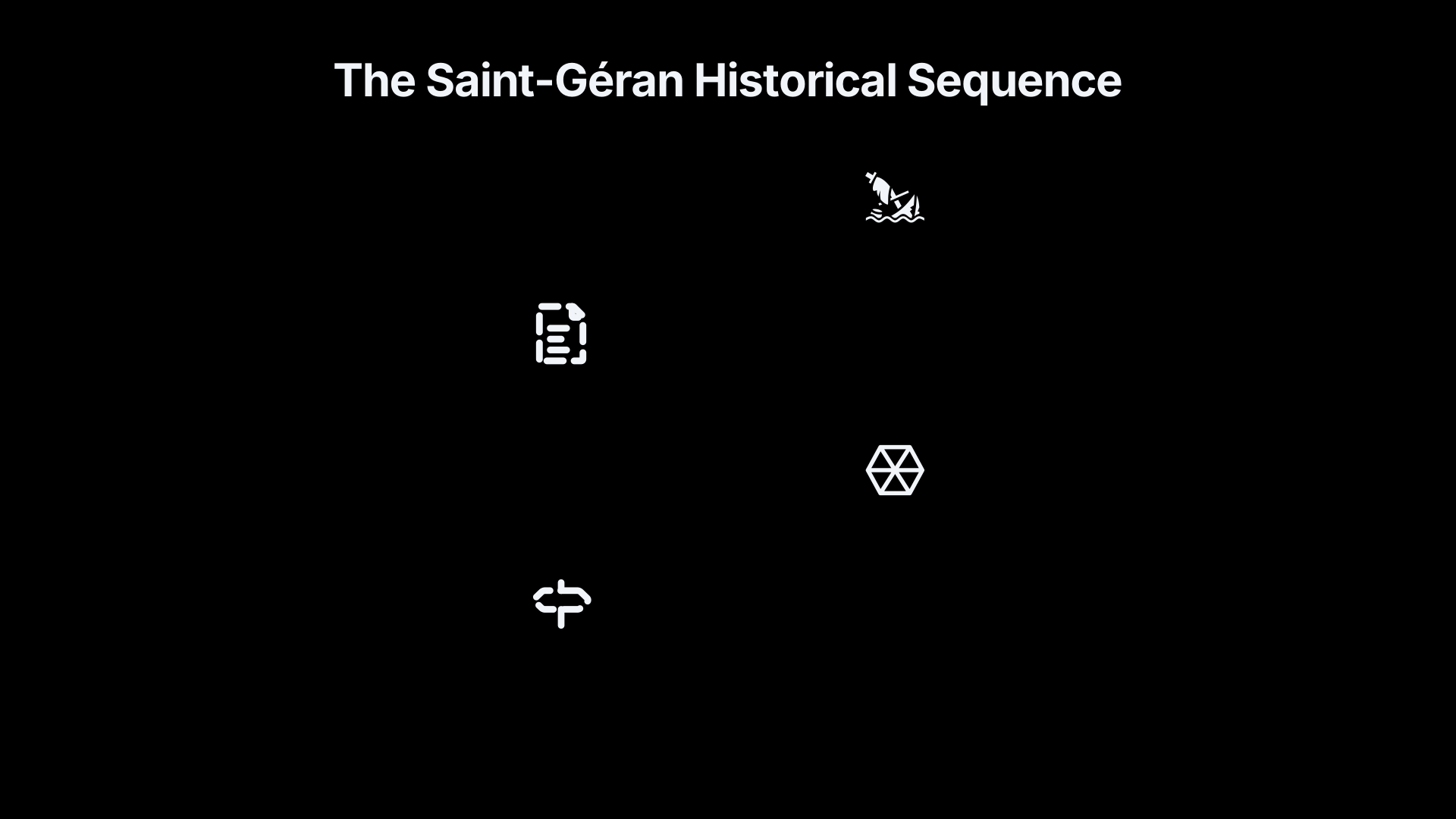
The Saint-Géran was a genuine French East India Company vessel that struck reefs off Mauritius in August 1744. Contemporary records and later archaeological investigations leave little doubt about the disaster itself. The ship broke apart on the reef and most of those aboard died. Archaeological work has identified wreck material, including anchors, cannon and cargo-related finds, confirming the historical reality of the event.[wrecksite.eu]wrecksite.euSAINT-GÉRAN FLUTE SHIP 1736-1744St Géran, with 110 crew and colonists aboard and cargo of iron sugar cauldrons, went aground and broke up…
The legend emerged decades later when Jacques-Henri Bernardin de Saint-Pierre published Paul et Virginie in 1788. The novel used the wreck as its emotional climax. Readers encountered a tragic young heroine who perished during the sinking while her lover watched helplessly from shore. The book became enormously popular across the French-speaking world and eventually overshadowed the actual history of the vessel.[Wikipedia]WikipediaPaul et VirginieApril 6, 2026 — Paul and Virginia is a novel by Jacques-Henri Bernardin de Saint-Pierre, first published in 1788. The novel's title chara…
What makes this case especially interesting is that the novel did not invent the ship. Instead, it borrowed credibility from a real disaster. Visitors could see the coastline, the memorials and the places associated with the wreck. The existence of genuine locations encouraged many later retellings to blur the boundary between literature and history. Over time, people often remembered the fictional passengers more clearly than the real crew, settlers, enslaved people and travellers who died in the catastrophe.[Le site de l'Ile Maurice]ilemaurice.imLe site de l'Ile Maurice Memorial to the sinking of the Saint GéranLe site de l'Ile MauriceMemorial to the sinking of the Saint Géran - Paul et VirginieThe Saint-Géran shipwreck memorial, located at Poudr…
Some later accounts went even further by treating details from the novel as though they were eyewitness history. Yet the historical wreck and the literary shipwreck differ in important ways. The novel transformed a navigational and maritime disaster into a moral and romantic tragedy. The ship became a storytelling device rather than simply a historical vessel.[Maurice Villas]maurice-villas.comIn the novel the boat is taken by a hurricaneMaurice VillasIn the footsteps of Paul & Virginie in Mauritius26 Feb 2021 — The ship on which Virginie is on, the Saint-Géran, did indeed…
Why the Story Was So Persuasive
Several factors helped the literary version eclipse the historical one:
- A real location: Readers could visit places associated with the wreck.
- A documented disaster: No one doubted that a ship named Saint-Géran had been lost.
- Emotional storytelling: The romance gave the event memorable characters.
- Monuments and tourism: Physical memorials reinforced the association between the novel and the wreck.[ilemaurice.im]ilemaurice.imLe site de l'Ile Maurice Memorial to the sinking of the Saint GéranLe site de l'Ile MauriceMemorial to the sinking of the Saint Géran - Paul et VirginieThe Saint-Géran shipwreck memorial, located at Poudr…
The lesson is not that people were deceived by a hoax. Rather, fiction attached itself so successfully to a real event that many later audiences struggled to separate the two.

The Oxford Dodo Bonfire Story
If the Saint-Géran illustrates literary myth-making, the Oxford dodo demonstrates how a museum story can become more dramatic than the evidence.
One of the most famous dodo specimens in the world is preserved at the Oxford University Museum of Natural History. The remains consist primarily of a head and foot and are extraordinarily important because they contain the only surviving soft tissue from a seventeenth-century dodo specimen.[ox.ac.uk]oumnh.ox.ac.uklearn the oxford dodoMuseum of Natural HistoryThe Oxford Dodo | Oxford University Museum of Natural HistoryThis specimen is first listed in 1656 in a catalogu…
For generations, a striking anecdote circulated: museum staff supposedly threw a stuffed dodo onto a bonfire, only for someone to rescue the head and foot at the last moment. The tale was irresistible. It suggested that one of science’s most valuable specimens had nearly vanished through ignorance and carelessness.
The problem is that museum research has found little evidence for this dramatic rescue. Curators and historians have shown that the story appears to have grown from misunderstandings about the specimen’s deterioration and removal from display. The remains were not miraculously snatched from flames in the way the popular legend suggests. Instead, the specimen gradually decayed over time, leaving only the portions that survive today.[ucl.ac.uk]blogs.ucl.ac.ukthe best natural history specimen in the worldthe best natural history specimen in the world
The myth persisted because it is more memorable than the truth. A slow process of deterioration is mundane. A last-minute rescue from a fire is unforgettable.
What Survived and Why It Matters
The surviving Oxford specimen occupies a unique place in dodo history because so few seventeenth-century examples reached modern museums intact. The preserved head retains soft tissue, making it invaluable for anatomical and genetic study. Researchers continue to learn from material that would have been lost had the specimen genuinely been destroyed.[ox.ac.uk]oumnh.ox.ac.uklearn the oxford dodoMuseum of Natural HistoryThe Oxford Dodo | Oxford University Museum of Natural HistoryThis specimen is first listed in 1656 in a catalogu…
The persistence of the bonfire story demonstrates how easily museum folklore can become accepted history. Once repeated in books, exhibitions and popular articles, a vivid anecdote can acquire an authority that exceeds the surviving documentary evidence.
Reconstructions, Composites and Misleading Displays
The dodo’s extinction created another fertile ground for misunderstanding. Because no complete specimen survives, every modern image of a dodo involves reconstruction. Artists, museum preparators and scientists have had to combine evidence from different sources: sketches made by seventeenth-century visitors, scattered skeletal remains, surviving soft tissue and subfossil bones recovered in Mauritius.[Natural History Museum]nhm.ac.ukthe dodo bird the real facts about this icon of extinctionthe dodo bird the real facts about this icon of extinction
This necessity has sometimes encouraged misleading impressions. Nineteenth-century displays often combined bones from multiple individuals into a single skeleton. Taxidermists produced mounted dodos using feathers and materials from other birds. Visitors could easily assume they were looking at an authentic preserved dodo when they were actually seeing a reconstruction based on partial evidence.[Wikipedia]WikipediaOpen source on wikipedia.org.
These displays were not necessarily intended to deceive. They reflected the scientific practices of their time. Yet they helped create a public image of the dodo that appeared more certain and complete than the evidence justified.
Mauritius’s discoveries at Mare aux Songes transformed understanding of the species by providing large quantities of subfossil material. Even so, important uncertainties remain about appearance, posture, plumage and behaviour. Modern museums increasingly explain these uncertainties rather than presenting reconstructions as unquestionable fact.[nhm.ac.uk]nhm.ac.ukthe dodo bird the real facts about this icon of extinctionthe dodo bird the real facts about this icon of extinction
How Real Objects Became Mauritian Legends
The Saint-Géran and the Oxford dodo illustrate the same underlying mechanism. Neither case began with a fabricated object. The shipwreck happened. The dodo specimen exists. The distortion emerged later when storytelling became attached to physical evidence.
In the Saint-Géran case, a historical wreck acquired fictional passengers. In the Oxford dodo case, a deteriorated specimen acquired a dramatic rescue narrative. Both stories survived because they offered something the documented record could not: emotional clarity, memorable characters and a neat narrative arc.[UNESCO Digital Library]unesdoc.unesco.orgUNESCO Digital LibraryThe Saint-Géran: from literary myth to museum objectJ The Saint-Giran, a 600-ton ship of the Conzpagnìe Frangaìse d…
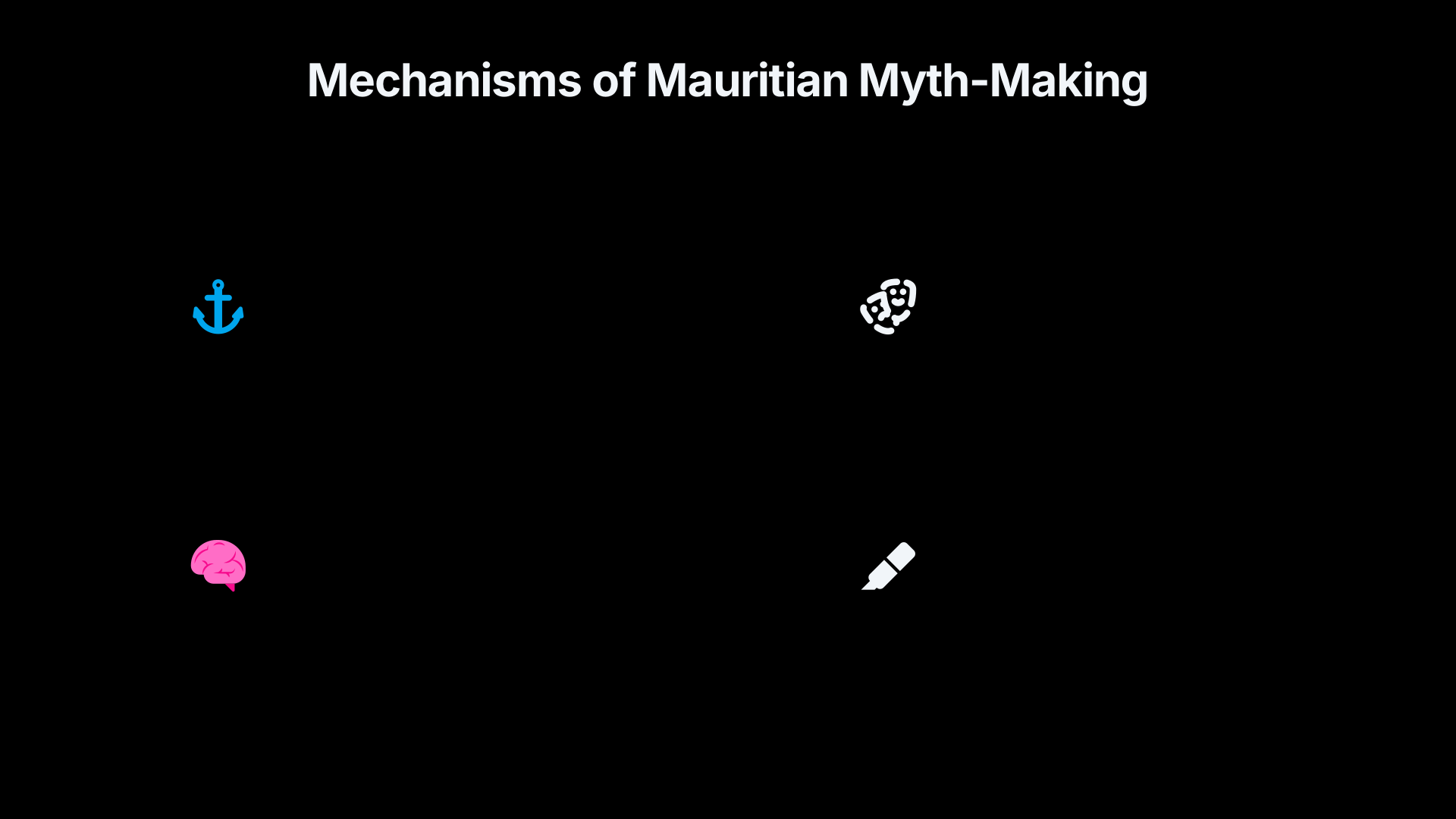
For Mauritius, these legends reveal how cultural memory often develops. Real places, artefacts and specimens provide an anchor of credibility. Around that anchor, later generations build stories that express local identity, literary tradition, scientific curiosity or simple fascination. The challenge for historians is not to dismiss those stories outright, but to understand where evidence ends and legend begins.[unesco.org]unesdoc.unesco.orgUNESCO Digital LibraryThe Saint-Géran: from literary myth to museum objectJ The Saint-Giran, a 600-ton ship of the Conzpagnìe Frangaìse d…
Amazon book picks
Further Reading
Books and field guides related to How Real Objects Became Mauritian Legends. Use these as the next step if you want deeper reading beyond the article.
The Dodo and the Solitaire
Directly covers the dodo, specimens and historical interpretation.
eBay marketplace picks
Marketplace Samples
Live-tested eBay searches with available results related to this page.

Endnotes
1.
Source: unesdoc.unesco.org
Link:https://unesdoc.unesco.org/ark%3A/48223/pf0000054925
Source snippet
UNESCO Digital LibraryThe Saint-Géran: from literary myth to museum objectJ The Saint-Giran, a 600-ton ship of the Conzpagnìe Frangaìse d...
2.
Source: wrecksite.eu
Link:https://www.wrecksite.eu/wreck.aspx?146319=
Source snippet
SAINT-GÉRAN FLUTE SHIP 1736-1744St Géran, with 110 crew and colonists aboard and cargo of iron sugar cauldrons, went aground and broke up...
3.
Source: Wikipedia
Title: Saint-Géran (navire)
Link:https://fr.wikipedia.org/wiki/Saint-G%C3%A9ran_%28navire%29
4.
Source: Wikipedia
Title: Paul et Virginie
Link:https://en.wikipedia.org/wiki/Paul_et_Virginie
Source snippet
April 6, 2026 — Paul and Virginia is a novel by Jacques-Henri Bernardin de Saint-Pierre, first published in 1788. The novel's title chara...
Published: April 6, 2026
5.
Source: maurice-villas.com
Title: In the novel the boat is taken by a hurricane
Link:https://www.maurice-villas.com/en/magazine/article-in-the-footsteps-of-paul-virginie-in-mauritius
Source snippet
Maurice VillasIn the footsteps of Paul & Virginie in Mauritius26 Feb 2021 — The ship on which Virginie is on, the Saint-Géran, did indeed...
6.
Source: Wikipedia
Title: Oxford University Museum of Natural History
Link:https://en.wikipedia.org/wiki/Oxford_University_Museum_of_Natural_History
7.
Source: Wikipedia
Link:https://en.wikipedia.org/wiki/Dodo
8.
Source: Wikipedia
Link:https://pt.wikipedia.org/wiki/Dod%C3%B4
9.
Source: oumnh.ox.ac.uk
Title: learn the oxford dodo
Link:https://oumnh.ox.ac.uk/learn-the-oxford-dodo
Source snippet
Museum of Natural HistoryThe Oxford Dodo | Oxford University Museum of Natural HistoryThis specimen is first listed in 1656 in a catalogu...
10.
Source: dialnet.unirioja.es
Link:https://dialnet.unirioja.es/descarga/articulo/9904950.pdf
Source snippet
(French East Indiaman Saint-Géran, 1744, coral barrier-reef...Read more...
11.
Source: ilemaurice.im
Title: Le site de l’Ile Maurice Memorial to the sinking of the Saint Géran
Link:https://www.ilemaurice.im/en/memorial-to-the-sinking-of-the-saint-geran-paul-and-virginie/
Source snippet
Le site de l'Ile MauriceMemorial to the sinking of the Saint Géran - Paul et VirginieThe Saint-Géran shipwreck memorial, located at Poudr...
12.
Source: guinnessworldrecords.com
Link:https://www.guinnessworldrecords.com/world-records/650372-most-complete-dodo-specimen
13.
Source: blogs.ucl.ac.uk
Title: the best natural history specimen in the world
Link:https://blogs.ucl.ac.uk/museums/2013/09/19/the-best-natural-history-specimen-in-the-world/
14.
Source: nhm.ac.uk
Title: the dodo bird the real facts about this icon of extinction
Link:https://www.nhm.ac.uk/discover/the-dodo-bird-the-real-facts-about-this-icon-of-extinction.html
15.
Source: guinnessworldrecords.de
Link:https://guinnessworldrecords.de/world-records/650372-most-complete-dodo-specimen
16.
Source: artensterben.de
Link:https://www.artensterben.de/en/dodo/
17.
Source: thedocumentarian.org
Title: Mauritius | Isle of Paul et Virginie
Link:https://thedocumentarian.org/mauritius-isle-of-paul-et-virginie/
18.
Source: aroundus.com
Link:https://aroundus.com/p/4449544-saint-geran
Additional References
19.
Source: facebook.com
Link:https://www.facebook.com/yasminabhai.vallijee/posts/history-grade-6the-st-g%C3%A9ran-ship-which-was-coming-to-mauritius-from-france-in-17/1738814440232798/
20.
Source: instagram.com
Link:https://www.instagram.com/p/DasnHGRjh7X/
21.
Source: facebook.com
Link:https://www.facebook.com/groups/824508912284442/posts/2091568582245129/
22.
Source: facebook.com
Link:https://www.facebook.com/groups/252029351211252/posts/824690257278489/
23.
Source: instagram.com
Link:https://www.instagram.com/p/DZ51_8mBqyX/
24.
Source: youtube.com
Title: Dodo Bird Unboxing
Link:https://www.youtube.com/watch?v=Te_WHneeD3s
Source snippet
PAST TIME Quick Bite - Dodos and the evolution of bird brains...
25.
Source: facebook.com
Title: project on shipwreck site of saint géran launched to explore submarine landscape
Link:https://www.facebook.com/GIS.Mauritius/posts/project-on-shipwreck-site-of-saint-g%C3%A9ran-launched-to-explore-submarine-landscape/179499998109047/
26.
Source: youtube.com
Title: Paul et Virginie – Une Histoire d’Amour et de Tragédie sur l’Île Maurice
Link:https://www.youtube.com/watch?v=_MrraXA8rnM
Source snippet
Dodo Bird Unboxing - Objectivity 130...
27.
Source: youtube.com
Title: What happened to the Dodo?
Link:https://www.youtube.com/watch?v=IbjALHh7IhU
Source snippet
One&Only Le Saint Geran, Mauritius - Destinology...
28.
Source: youtube.com
Title: PAST TIME Quick Bite
Link:https://www.youtube.com/watch?v=sMwY_3_WFRI
Source snippet
What happened to the Dodo?...
Topic Tree