Within Maldives
Did a Lost Civilisation Really Settle the Maldives?
Real ruins inspired a dramatic story of ancient sun worshippers that later archaeology did not confirm.
On this page
- What Heyerdahl claimed to have found
- Why the theory captured public imagination
- What later archaeology supports instead
Page outline Jump by section
Introduction
Did a lost civilisation really settle the Maldives? The short answer is that there is no convincing archaeological evidence for the dramatic version of the story. The idea became famous through the work of Norwegian explorer Thor Heyerdahl, who excavated ancient sites in the Maldives during the 1980s and argued that the islands may once have been occupied by a previously unknown population of sun-worshipping seafarers. His discoveries were real, and they helped draw global attention to Maldivian archaeology. However, the wider theory of a forgotten civilisation predating the known Buddhist era has not been accepted by most archaeologists. Later research has instead reinforced a picture of the Maldives as part of wider South Asian and Indian Ocean cultural networks, with abundant evidence for Buddhism before the islands’ conversion to Islam in the twelfth century.[wikipedia.org]WikipediaThor HeyerdahlThor Heyerdahl
Within the history of disputed claims and misunderstood stories in the Maldives, Heyerdahl’s theory is best understood not as a deliberate hoax but as a highly speculative interpretation that gained authority because it was attached to a world-famous explorer.
What Heyerdahl Claimed to Have Found
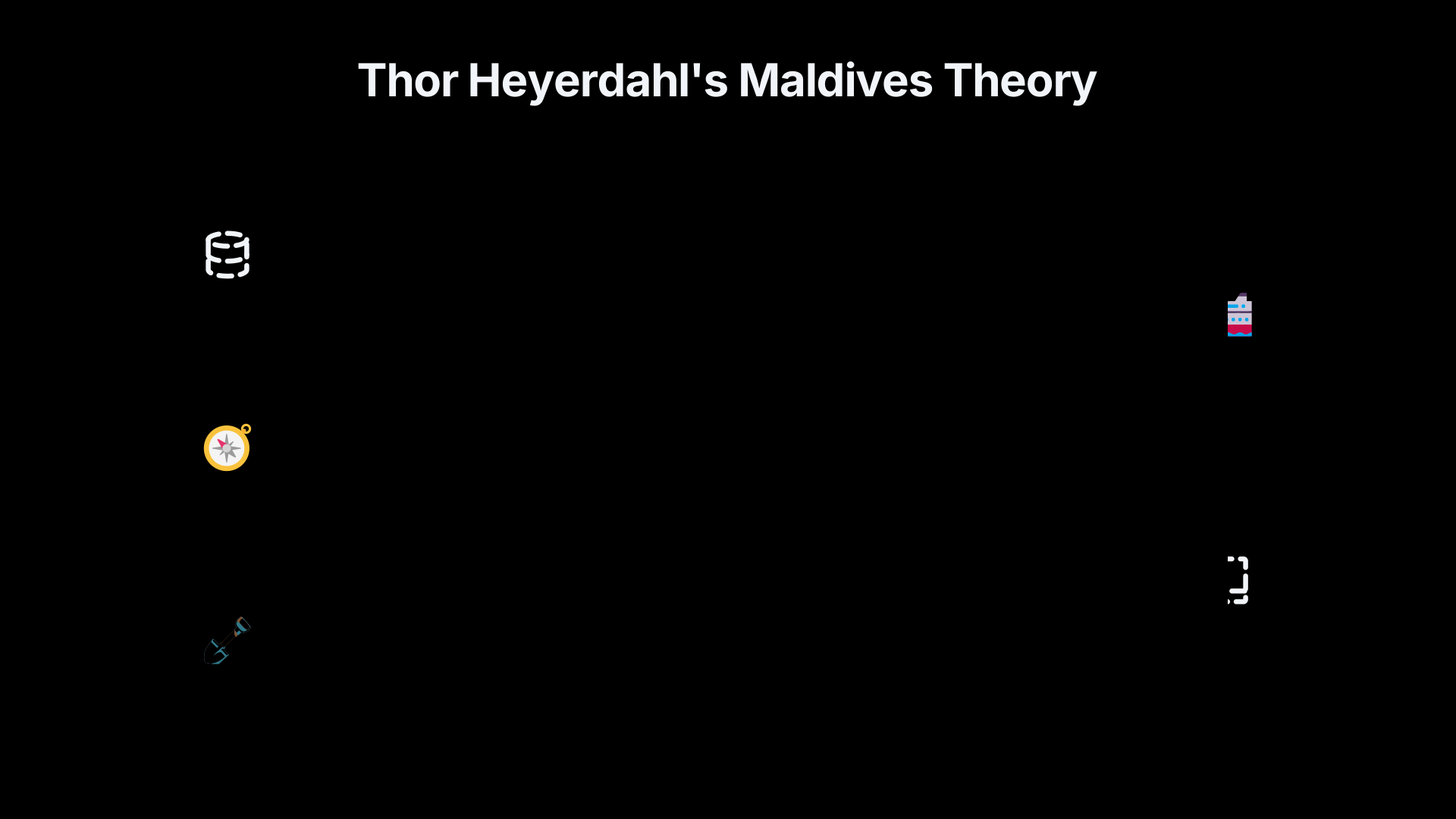
Thor Heyerdahl arrived in the Maldives with an international reputation already established through the Kon-Tiki expedition and his broader interest in ancient ocean crossings. During excavations on several islands, he investigated large archaeological mounds known locally as havittas, structures generally associated with the Buddhist period of Maldivian history.[Wikipedia]WikipediaThor HeyerdahlThor Heyerdahl
Heyerdahl argued that some features he uncovered appeared older than the visible Buddhist monuments. He became particularly interested in foundations and structures that seemed aligned with the rising sun. Combined with carved stone figures and other fragments, these observations led him to propose that an earlier population of sun worshippers had settled the islands before the historically documented Buddhist culture. He further linked this supposed population to broader migration theories that connected Sri Lanka, the Indian Ocean and other regions far beyond the Maldives.[Wikipedia]WikipediaThor HeyerdahlThor Heyerdahl
The claim was far more ambitious than simply saying that ancient people lived in the Maldives. Archaeologists already knew that the islands possessed a rich pre-Islamic past. Heyerdahl’s distinctive contribution was the suggestion that the visible Buddhist remains concealed traces of an even older and largely forgotten civilisation whose influence stretched across oceans.[Wikipedia]WikipediaThor HeyerdahlThor Heyerdahl
Why the Theory Captured Public Imagination
The appeal of Heyerdahl’s interpretation was easy to understand.
First, it contained all the ingredients of a compelling mystery: remote islands, buried ruins, enigmatic carvings and the possibility of a forgotten people. The Maldives were internationally known as a tropical island chain but remained archaeologically obscure to many readers. A theory about a lost civilisation transformed them into a stage for ancient secrets.
Second, the messenger mattered. Heyerdahl was not an unknown enthusiast. He was one of the twentieth century’s most famous explorers. His previous voyages had convinced many people that orthodox views of ancient migration might be too conservative. Even when specialists disagreed with him, the public often regarded him as an adventurous thinker who challenged accepted wisdom.[Wikipedia]WikipediaThor HeyerdahlThor Heyerdahl
Third, there were genuine archaeological discoveries behind the story. The ruins were real. Ancient structures, carvings and artefacts existed across the islands. Because the physical evidence was authentic, readers could easily assume that the broader historical reconstruction was equally secure. The line between observation and interpretation became blurred.[Kon-Tiki museet]kon-tiki.noPlastered floor (ruin XL) with many other ruins (Photo: Egil Mikkelsen).Read more…
This is one reason the story continues to circulate in travel writing, popular history and online discussions. The theory offers a dramatic narrative that is easier to remember than the slower and more complicated story of trade routes, religious change and regional cultural exchange.
Where the Evidence Became Weak
The central problem was not the discovery of ruins. It was the leap from those ruins to a specific story about a vanished civilisation.
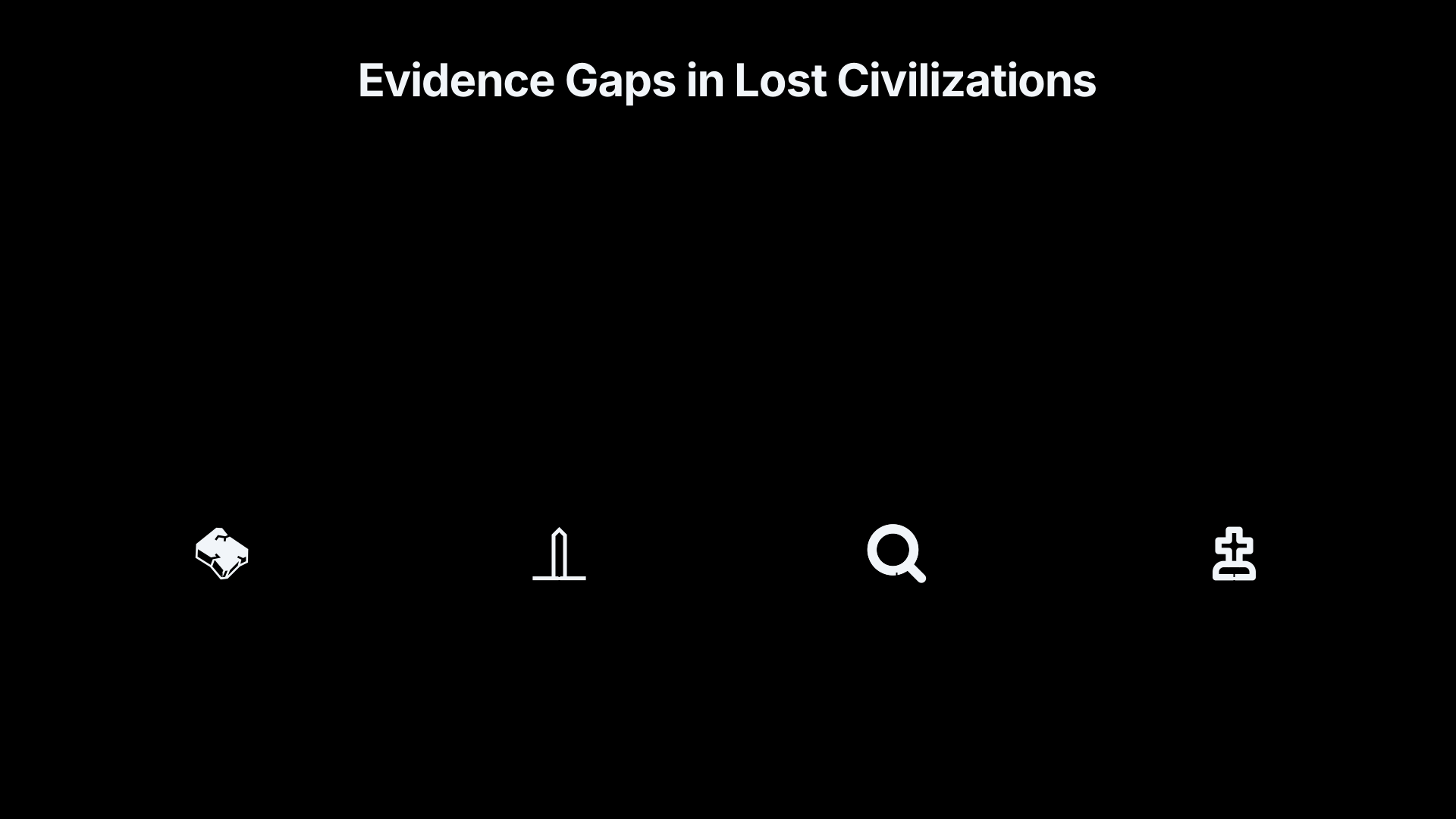
Archaeologists generally require multiple lines of evidence before accepting claims about a distinct ancient population. Such evidence might include inscriptions, identifiable artefacts, settlement patterns, human remains, linguistic traces or clear cultural continuity. In the Maldives, the evidence uncovered by Heyerdahl did not provide that level of support for his proposed civilisation.[Maritime Asia Heritage Survey]maritimeasiaheritage.cseas.kyoto-u.ac.jpMaritime Asia Heritage SurveyArchaeological Excavations of a Monastery at KaashidhooPresent knowledge of the early history of the Maldive…
Features such as monument orientation can also be difficult to interpret. Structures may face particular directions for many reasons, including religious traditions, local geography, construction practices or later rebuilding. An eastward alignment alone does not prove the existence of a separate cult of sun worshippers. Later researchers have generally been cautious about drawing such conclusions.[Wikipedia]WikipediaHistory of the MaldivesHistory of the Maldives
Critics also noted that Heyerdahl often approached archaeological sites with migration theories already in mind. This tendency appeared in several of his projects around the world. While his expeditions demonstrated that long-distance voyages were possible, many specialists argued that he frequently moved beyond what the archaeological evidence could actually establish.[Wikipedia]WikipediaThor HeyerdahlThor Heyerdahl
What Later Archaeology Supports Instead
Subsequent archaeological work has painted a different picture of the Maldives’ early history.
Research at sites such as Kaashidhoo has revealed substantial Buddhist remains, including monasteries and religious structures dating back many centuries. Excavations and radiocarbon dating have shown that Buddhism was deeply established in the islands long before the conversion to Islam. The artefacts recovered from these sites fit within recognised Buddhist traditions rather than pointing to an otherwise unknown civilisation.[kyoto-u.ac.jp]maritimeasiaheritage.cseas.kyoto-u.ac.jpMaritime Asia Heritage SurveyArchaeological Excavations of a Monastery at KaashidhooPresent knowledge of the early history of the Maldive…
Broader surveys have also strengthened understanding of the Maldives as part of interconnected Indian Ocean networks. Archaeological remains, inscriptions and cultural influences link the islands to South Asia and neighbouring maritime regions. Rather than revealing an isolated lost civilisation, the evidence increasingly highlights centuries of exchange involving religion, trade and migration.[kyoto-u.ac.jp]maritimeasiaheritage.cseas.kyoto-u.ac.jpMaritime Asia Heritage SurveyArchaeological Excavations of a Monastery at KaashidhooPresent knowledge of the early history of the Maldive…
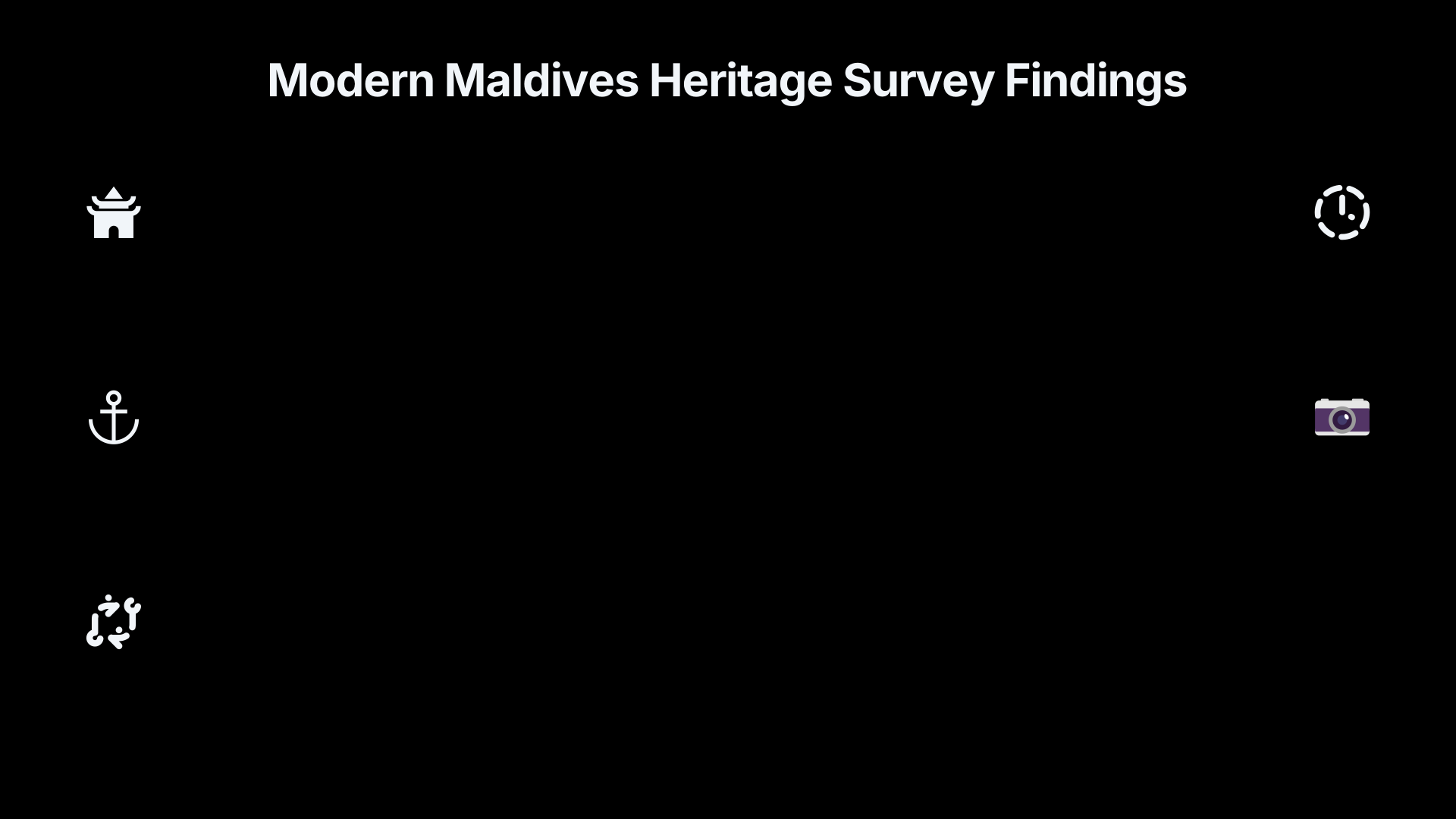
The modern Maldives Heritage Survey has continued this process through systematic documentation of Buddhist ruins, mosques, cemeteries and other historic sites. Its emphasis is on careful recording, mapping and preservation rather than searching for evidence of a vanished race of settlers.[oxcis.ac.uk]oxcis.ac.ukOxford Centre for Islamic StudiesMaldives Heritage SurveyThe Maldives Heritage Survey inventoried and documented endangered tangible cult…
A Mystery That Outlived the Evidence
The enduring popularity of Heyerdahl’s theory illustrates a common pattern in the history of disputed historical claims. Real discoveries generate excitement, a speculative explanation emerges, and the explanation sometimes becomes more famous than the evidence itself.
Heyerdahl undoubtedly helped bring international attention to Maldivian archaeology. His expeditions renewed interest in sites that had received limited global attention and encouraged further investigation of the islands’ pre-Islamic past. Even critics generally acknowledge that contribution.[Facebook]facebook.comOpen source on facebook.com.
What later research has not confirmed is the existence of the dramatic lost civilisation that became associated with his work. The ruins remain important historical monuments, but they are now understood primarily within the context of the Maldives’ documented Buddhist heritage and its place in the wider Indian Ocean world.[kyoto-u.ac.jp]maritimeasiaheritage.cseas.kyoto-u.ac.jpMaritime Asia Heritage SurveyArchaeological Excavations of a Monastery at KaashidhooPresent knowledge of the early history of the Maldive…
For that reason, Thor Heyerdahl’s lost civilisation theory occupies an unusual place in Maldivian history. It was neither a straightforward hoax nor an accepted historical reconstruction. Instead, it was a speculative idea built upon genuine archaeological finds—an example of how compelling narratives can sometimes travel further than the evidence that inspired them.[wikipedia.org]WikipediaThor HeyerdahlThor Heyerdahl
Amazon book picks
Further Reading
Books and field guides related to Did a Lost Civilisation Really Settle the Maldives?. Use these as the next step if you want deeper reading beyond the article.
eBay marketplace picks
Marketplace Samples
Live-tested eBay searches with available results related to this page.


Endnotes
1.
Source: Wikipedia
Title: Thor Heyerdahl
Link:https://en.wikipedia.org/wiki/Thor_Heyerdahl
2.
Source: kon-tiki.no
Link:https://www.kon-tiki.no/en/news/the-archaeology-of-buddhism-in-the-maldives
Source snippet
Plastered floor (ruin XL) with many other ruins (Photo: Egil Mikkelsen).Read more...
3.
Source: Wikipedia
Title: History of the Maldives
Link:https://en.wikipedia.org/wiki/History_of_the_Maldives
4.
Source: Wikipedia
Link:https://en.wikipedia.org/wiki/Maldives
5.
Source: ora.ox.ac.uk
Title: ORAMaldives Heritage Survey
Link:https://ora.ox.ac.uk/objects/uuid%3A3e3369f1-fd1a-4c62-8cb8-f5a29ea50ecc
Source snippet
by RM Feener · 2023 · Cited by 14 — Documentation: The Maldives Heritage Survey aims to systematically inventory and document endanger...
6.
Source: facebook.com
Link:https://www.facebook.com/KonTikiMuseum/posts/today-the-maldives-celebrate-their-independence-day-did-you-know-that-thor-heyer/10154502944086230/
7.
Source: maritimeasiaheritage.cseas.kyoto-u.ac.jp
Link:https://maritimeasiaheritage.cseas.kyoto-u.ac.jp/wp-content/uploads/2022/03/Mikkelsen-Egil.-2000.-Archaeological-Excavations-of-a-Monastery-at-Kaasidhoo.pdf
Source snippet
Maritime Asia Heritage SurveyArchaeological Excavations of a Monastery at KaashidhooPresent knowledge of the early history of the Maldive...
8.
Source: oxcis.ac.uk
Link:https://www.oxcis.ac.uk/maldives-heritage-survey
Source snippet
Oxford Centre for Islamic StudiesMaldives Heritage SurveyThe Maldives Heritage Survey inventoried and documented endangered tangible cult...
9.
Source: persee.fr
Title: befeo 0336 1519 1987 num 76 1 1726
Link:https://www.persee.fr/doc/befeo_0336-1519_1987_num
Source snippet
PerséeThe Pre-Islamic Archaeology of the Maldive Islandsby A Forbes · 1987 · Cited by 25 — It was not until 1922 that definite archaeolog...
Additional References
10.
Source: youtube.com
Title: Great Voyages: Thor Heyerdahl and Kon Tiki: A Grand Experiment in Archaeology
Link:https://www.youtube.com/watch?v=FsDNlD7pGa4
Source snippet
Polynesian Origins: DNA, Migrations and History...
11.
Source: youtube.com
Link:https://www.youtube.com/watch?v=Vbyl6QFu5SQ
Source snippet
Maldives Island Of Kudahuvadhoo In Dhaalu Atoll...
12.
Source: youtube.com
Link:https://www.youtube.com/watch?v=J7wABa6_BlQ
Source snippet
The Adventurers—Thor Heyerdahl: Across the Sea of Time (S1 EP2, 1997)...
13.
Source: resortlife.travel
Link:https://resortlife.travel/history-of-maldives/kaashidhoo-monastery
14.
Source: www-archive.cseas.kyoto-u.ac.jp
Link:https://www-archive.cseas.kyoto-u.ac.jp/newsletter/nl78/07_feener.html
15.
Source: tourism.gov.mv
Link:https://www.tourism.gov.mv/
16.
Source: x.com
Link:https://x.com/NaajihDidi/status/1011969223432630272
17.
Source: books.google.com
Title: Books The Maldive Mystery
Link:https://books.google.com/books/about/The_Maldive_Mystery.html?id=LcmFAAAAIAAJ
Source snippet
Google BooksThe Maldive Mystery - Thor HeyerdahlThe enduring author of Kon-Tiki now unravels one of archaeology's most beguiling island m...
18.
Source: youtube.com
Title: Polynesian Origins: DNA, Migrations and History
Link:https://www.youtube.com/watch?v=ahfPbDLDu38
Source snippet
National Geographic: The Tigris Expedition (1978)...
19.
Source: dreamingofmaldives.com
Link:https://www.dreamingofmaldives.com/a-guide-to-maldives-history-in-search-of-the-past/
Topic Tree