Within Croatian Hoaxes
Why the False Vukovar Children Story Spread
A false report that 41 Serbian children had been killed spread rapidly during Vukovar's fall before its supposed witness admitted inventing it.
On this page
- The claim, its transmission and rapid withdrawal
- Why atrocity propaganda was persuasive in 1991
- Retraction, revenge narratives and lasting consequences
Page outline Jump by section
Introduction
The false story that 41 Serbian children had been massacred in Vukovar is one of the most notorious propaganda episodes of the Croatian War of Independence. It emerged during the final days of the battle for Vukovar in November 1991, when violence, fear and ethnic hatred had reached extreme levels. A freelance photographer claimed that Croatian forces had slaughtered dozens of Serbian children in a school at Borovo Naselje. The allegation was transmitted internationally and rapidly amplified by Serbian media before collapsing when the supposed witness admitted that he had not actually seen or counted any bodies.[Wikipedia]WikipediaVukovar children massacre hoaxVukovar children massacre hoax
The significance of the episode lies not only in the fabrication itself but in the speed with which it spread and the atmosphere that made it believable. The story became a powerful example of wartime atrocity propaganda: a false claim that exploited genuine fear, reinforced existing prejudices and helped intensify demands for revenge at a moment when civilians and prisoners were already at grave risk.[Wikipedia]WikipediaVukovar children massacre hoaxVukovar children massacre hoax
The Claim, Its Transmission and Rapid Withdrawal
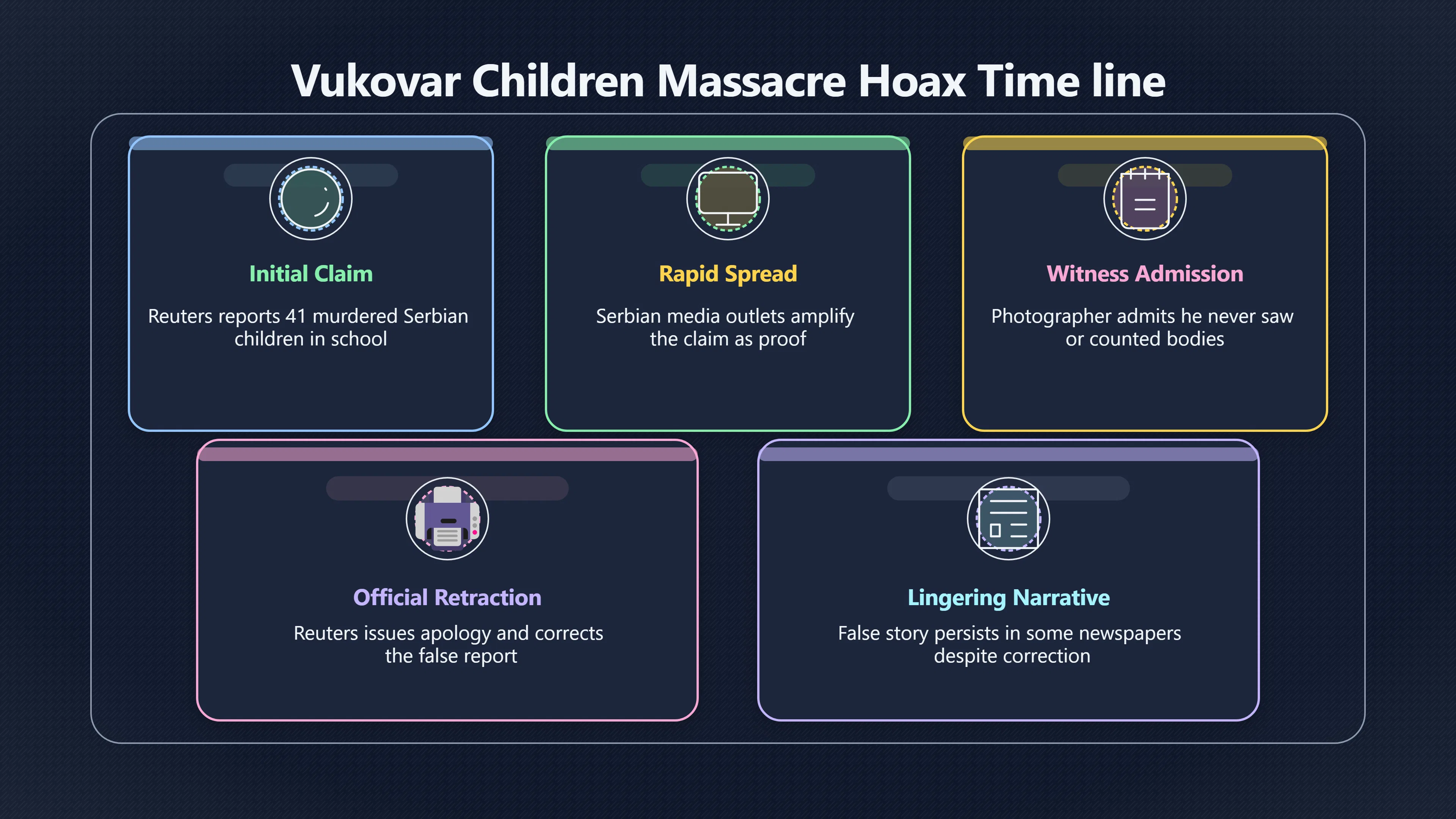
On 20 November 1991, shortly after the fall of Vukovar, Reuters distributed a report stating that 41 Serbian children aged roughly five to seven had been found murdered in a school in the Borovo Naselje district. The report relied on statements attributed to freelance photographer Goran Mikić, who said he had seen and counted the bodies and had been told that Croatian forces were responsible.[Wikipedia]WikipediaVukovar children massacre hoaxVukovar children massacre hoax
The allegation arrived at a moment when audiences were primed to believe the worst. Vukovar had endured months of siege, heavy shelling and brutal fighting. Reports of killings, disappearances and atrocities from all sides were circulating constantly. In such conditions, a claim involving murdered children possessed enormous emotional force.[Wikipedia]WikipediaBattle of VukovarBattle of Vukovar
The story spread rapidly through Serbian television, newspapers and other media outlets. Rather than being treated as an unverified allegation, it was often presented as proof of Croatian barbarity and as evidence that Serbian communities faced extermination if military action ceased.[Wikipedia]WikipediaVukovar children massacre hoaxVukovar children massacre hoax
The claim unravelled almost immediately. Reuters withdrew the report within a day after Mikić acknowledged that he had neither seen nor counted the bodies he had described. Reuters issued a correction and apology to subscribers, recognising that the report contained false information. The Yugoslav People’s Army also publicly distanced itself from the allegation, and Serbian state television was eventually forced to acknowledge that the story was untrue.[wikipedia.org]WikipediaVukovar children massacre hoaxVukovar children massacre hoax
Yet the retraction never travelled as far or as fast as the original allegation. Some newspapers continued to feature the claim prominently even after it had been discredited, while corrections appeared later and with much less visibility.[Wikipedia]WikipediaVukovar children massacre hoaxVukovar children massacre hoax
Why Atrocity Propaganda Was Persuasive in 1991
The Vukovar children story did not succeed because it was well evidenced. It succeeded because it matched an existing emotional and political narrative.
Throughout the Yugoslav wars, competing media systems routinely portrayed the opposing ethnic group as an existential threat. Serbian and Croatian outlets alike often framed events through stories of victimhood and historical grievance. Claims about murdered children were especially powerful because they transformed a complex military conflict into a simple moral drama with innocent victims and monstrous perpetrators.[Wikipedia]WikipediaBattle of VukovarBattle of Vukovar
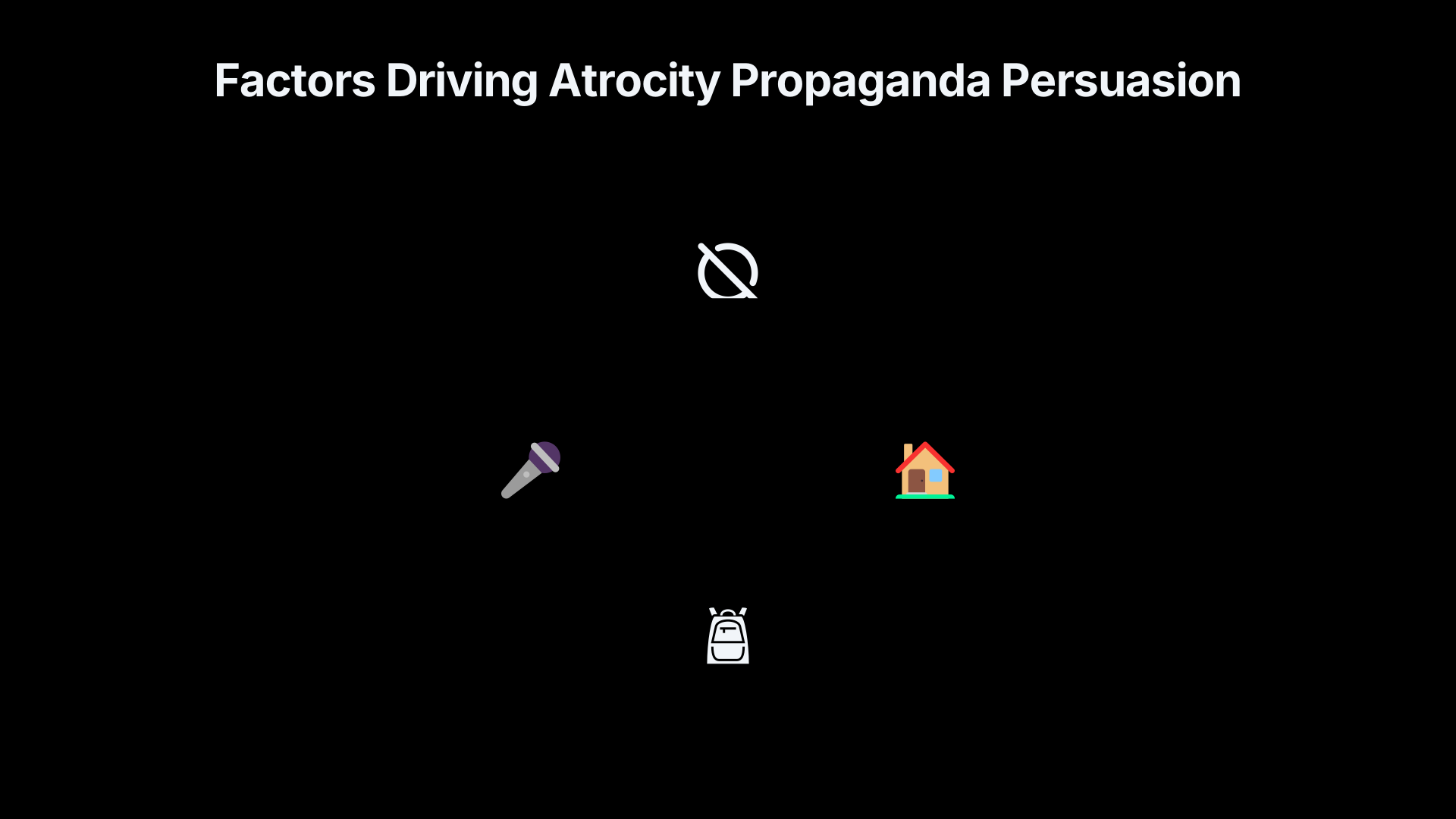
Several factors made the fabrication persuasive:
- Extreme uncertainty: Independent verification inside and around Vukovar was difficult during the siege and immediately after its fall. Reliable information was scarce.[Wikipedia]WikipediaBattle of VukovarBattle of Vukovar
- Existing fear: Many civilians genuinely feared ethnic violence and expulsion. Audiences were therefore predisposed to accept shocking claims.[Wikipedia]WikipediaBattle of VukovarBattle of Vukovar
- Symbolic power of children: Stories involving children trigger strong emotional reactions and often bypass normal scepticism.[Wikipedia]WikipediaVukovar children massacre hoaxVukovar children massacre hoax
- Authority effects: The claim was repeated through recognised media channels, including an international news agency, giving it an appearance of credibility.[Wikipedia]WikipediaVukovar children massacre hoaxVukovar children massacre hoax
The episode also illustrates a recurring feature of wartime misinformation. Once a dramatic story confirms what an audience already fears or believes, later corrections often struggle to erase its impact. The emotional memory of the allegation can outlast the evidence that disproved it.[Wikipedia]WikipediaVukovar children massacre hoaxVukovar children massacre hoax
Retraction, Revenge Narratives and Lasting Consequences
The false story’s importance stems from what happened around it rather than from the fabrication alone.
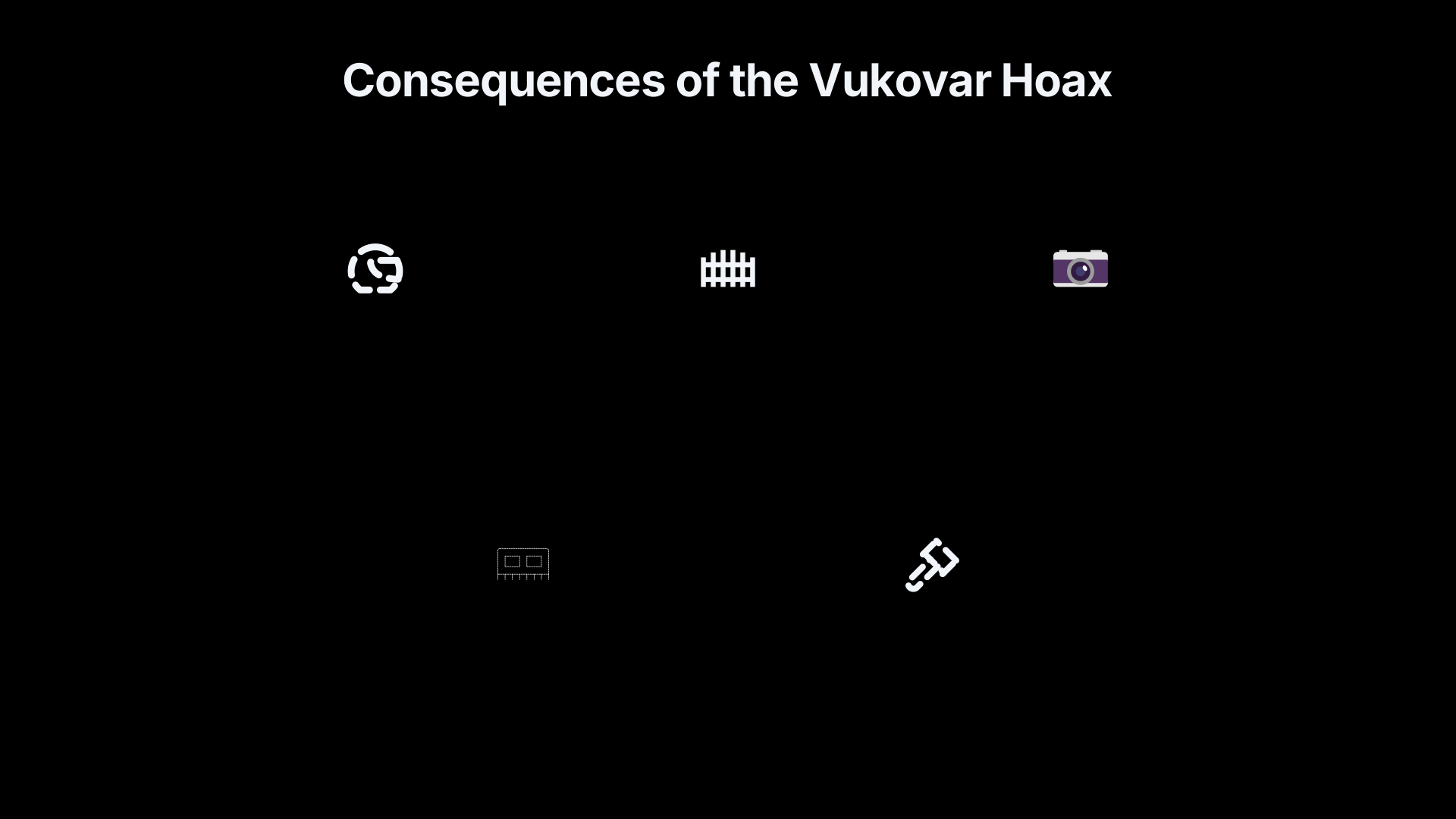
Researchers of Balkan media propaganda have frequently cited the episode as an example of how inflammatory reporting helped create an atmosphere in which violence became easier to justify. Expert evidence presented before the International Criminal Tribunal for the former Yugoslavia identified nationalist media campaigns as an important factor in mobilising public opinion and deepening ethnic hostility.[Unified Court Records Database]ucr.irmct.orgUnified Court Records DatabaseMSC429R0000005762.docWith the media acting as go-between, nationalist political propaganda prepared and con…
The most serious concern is the relationship between the fabricated story and subsequent acts of revenge. Dr Vesna Bosanac, the wartime director of Vukovar Hospital, later testified that she believed the story about murdered Serbian children was deliberately circulated to inflame Serbian nationalist sentiment and encourage retaliation against Croats. Her comments became part of later discussions about the climate surrounding the Ovčara massacre, in which Croatian prisoners and civilians were executed after the fall of Vukovar.[Wikipedia]WikipediaVukovar children massacre hoaxVukovar children massacre hoax
Historians are careful not to reduce complex atrocities to a single cause. The Ovčara killings resulted from multiple military, political and ideological factors. Nevertheless, the fabricated children story remains significant because it demonstrates how false atrocity narratives can become part of a broader environment that legitimises revenge and collective punishment.[Wikipedia]WikipediaVukovar children massacre hoaxVukovar children massacre hoax
The affair also damaged confidence in wartime reporting. Reuters’ rapid correction prevented the false claim from becoming accepted international fact, but the incident revealed how even major news organisations can become conduits for misinformation when operating in chaotic conflict zones.[Wikipedia]WikipediaVukovar children massacre hoaxVukovar children massacre hoax
What Vukovar Story reveals about belief and deception
More than three decades later, the Vukovar children fabrication remains one of the clearest examples of wartime misinformation associated with Croatia’s conflict of the early 1990s. It is remembered not because the claim was true, but because it shows how quickly an emotionally powerful falsehood can shape public opinion during a crisis.[Wikipedia]WikipediaVukovar children massacre hoaxVukovar children massacre hoax
The episode sits at the intersection of journalism, propaganda and collective memory. It demonstrates how a single unverified allegation can travel through international news networks, become a political weapon and survive in public memory even after retraction. It also serves as a reminder that atrocity stories require especially careful verification. In wartime, genuine crimes occur alongside rumours, exaggerations and deliberate fabrications, and the distinction can have life-and-death consequences.[Wikipedia]WikipediaVukovar children massacre hoaxVukovar children massacre hoax
Amazon book picks
Further Reading
Books and field guides related to Why the False Vukovar Children Story Spread. Use these as the next step if you want deeper reading beyond the article.
Mistakes Were Made (but Not by Me)
Explains how people cling to false claims despite contrary evidence.
Balkan Ghosts
Explores historical tensions that shaped wartime information environments.
On Killing
Helps explain the emotional environment in wartime reporting and propaganda.
eBay marketplace picks
Marketplace Samples
Live-tested eBay searches with available results related to this page.

Endnotes
1.
Source: Wikipedia
Title: Vukovar children massacre hoax
Link:https://en.wikipedia.org/wiki/Vukovar_children_massacre_hoax
2.
Source: icty.org
Link:https://www.icty.org/x/cases/slobodan_milosevic/prosexp/bcs/rep-srb-foot.htm
Source snippet
stio da je kod Vukovara...Read more...
3.
Source: Wikipedia
Title: Battle of Vukovar
Link:https://en.wikipedia.org/wiki/Battle_of_Vukovar
4.
Source: Wikipedia
Link:https://en.wikipedia.org/wiki/Vukovar
5.
Source: Wikipedia
Title: 1991 killings of Serbs in Vukovar
Link:https://en.wikipedia.org/wiki/1991_killings_of_Serbs_in_Vukovar
6.
Source: Wikipedia
Title: Masacre de niños en Vukovar
Link:https://es.wikipedia.org/wiki/Masacre_de_ni%C3%B1os_en_Vukovar
7.
Source: youtube.com
Link:https://www.youtube.com/watch?v=hpRz2tN5Naw
Source snippet
Yugoslav Wars | 3 Minute History...
8.
Source: youtube.com
Title: Yugoslav Wars | 3 Minute History
Link:https://www.youtube.com/watch?v=SjpxPEGTVpA
Source snippet
Serb returns to native Croatia, 30 years after 'Operation Storm' | DW News...
9.
Source: ucr.irmct.org
Link:https://ucr.irmct.org/LegalRef/CMSDocStore/Public/English/Reports/NotIndexable/IT-02-54/MSC429R0000005762.doc
Source snippet
Unified Court Records DatabaseMSC429R0000005762.docWith the media acting as go-between, nationalist political propaganda prepared and con...
10.
Source: washingtonpost.com
Link:https://www.washingtonpost.com/archive/opinions/1997/07/14/a-mockery-of-justice/ac0d617d-2f95-46a8-930e-573fab0ef3e6/
Source snippet
Opinion | A MOCKERY OF JUSTICE13 Jul 1997 — I have seen the photographs by Goran Mikic (Reuters) of a Serbian child... But none of these...
Additional References
11.
Source: washingtonexaminer.com
Title: reuters same dog same tricks
Link:https://www.washingtonexaminer.com/news/1696059/reuters-same-dog-same-tricks/
Source snippet
Reuters: Same Dog, Same Tricks10 Jun 2010 — Reuters immediately reported that a photographer, Goran Mikic... massacre of some 8,000 Bosn...
12.
Source: youtube.com
Title: Serb returns to native Croatia, 30 years after ‘Operation Storm’ | DW News
Link:https://www.youtube.com/watch?v=WKEi4k5D9-k
Source snippet
Media Manipulation - The Bosnian Death Camp Pictures MrBritD · 93 views...
13.
Source: youtube.com
Title: How Did The Media Cover The Croatian War Of Independence?
Link:https://www.youtube.com/watch?v=jrkxypRORmY
Source snippet
Media Manipulation - The Bosnian Death Camp Pictures...
14.
Source: vreme.com
Title: Who? Is it me?
Link:https://vreme.com/en/vreme/ko-je-l-ja-2/
Source snippet
Time - Vreme6 Mar 2003 — After all, there were children's corpses, but five, killed by the bombing!". In a day or two, the deception was...
15.
Source: youtube.com
Title: Media Manipulation
Link:https://www.youtube.com/watch?v=nfaJqCOcf7Y
Source snippet
Yugoslav Wars (1991–2001) | How Did Yugoslavia Fall Into Chaos...
Topic Tree