Within Guatemala Deceptions
Why Convincing Evidence Can Still Be False
Guatemala's best-known deceptions succeeded by borrowing the authority of trusted media, victims, institutions and ancient tradition.
On this page
- How trusted formats manufacture belief
- Why fear and political memory amplify claims
- How investigators separate appearance from proof
Page outline Jump by section
Introduction
False evidence becomes credible in Guatemala for the same reason it becomes credible almost anywhere: it borrows the appearance of something people already trust. What makes the Guatemalan experience distinctive is the combination of political upheaval, weak institutions, violence, deep historical memory and powerful symbols of authority. In several of the country’s most famous deceptions, the falsehood did not succeed because it was especially sophisticated. It succeeded because it looked like trustworthy evidence already familiar to the public.
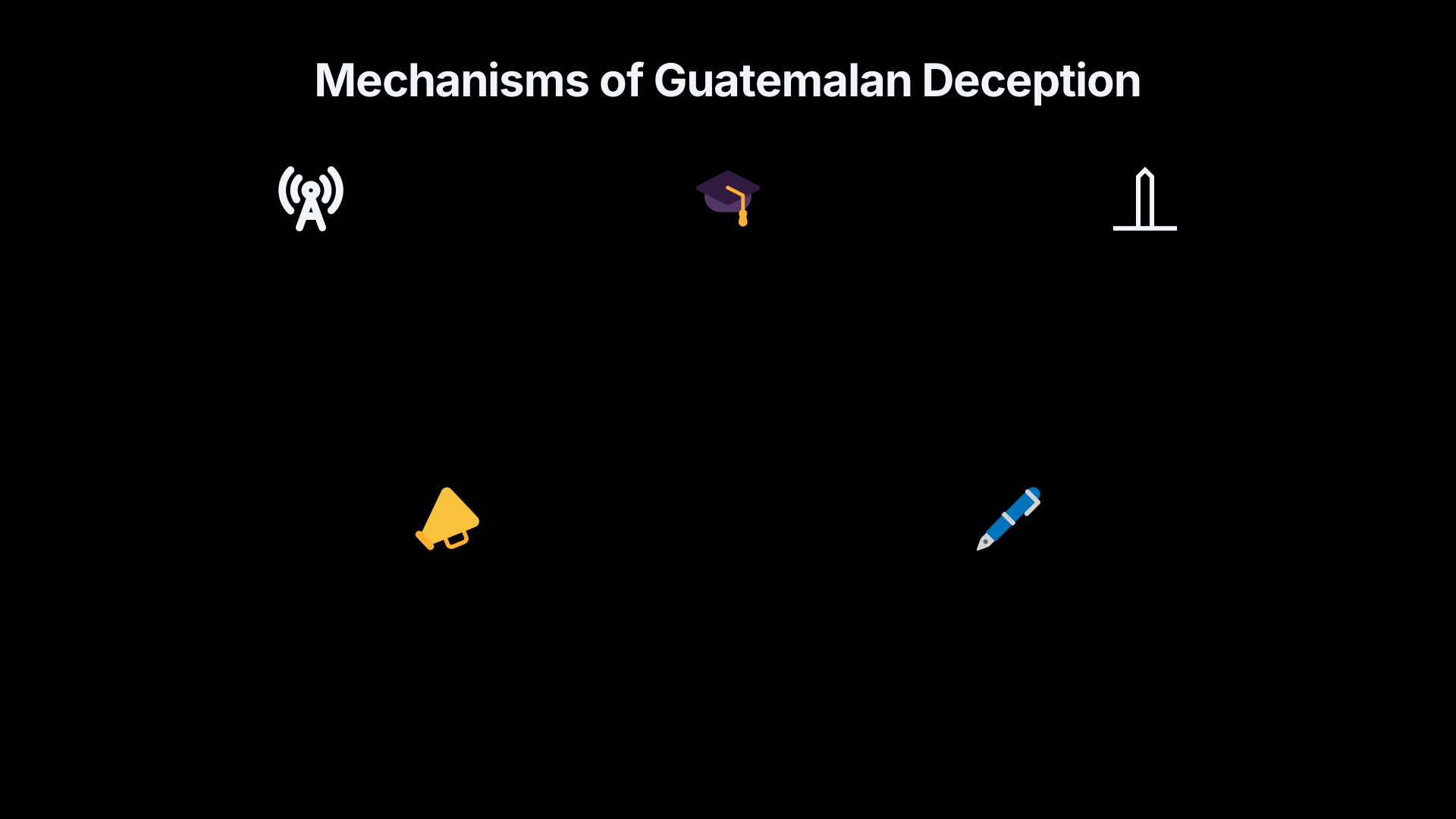
A clandestine radio station sounded like genuine battlefield reporting during the 1954 coup. A murdered lawyer’s recorded message appeared to be an impossible posthumous confession. Claims about a supposed Maya prediction of the end of the world gained force because they were attached to ancient monuments and archaeological authority. In each case, belief flowed not from proof itself but from the credibility of the format carrying the claim. Understanding these mechanisms helps explain why some of Guatemala’s most influential false narratives spread so effectively and why they often survive long after investigators challenge them.[theguardian.com]theguardian.comThe Guardian The truth about Guatemala's You Tube murderThe GuardianThe truth about Guatemala's YouTube murderJanuary 13, 2010 — 13 Jan 2010 — Lawyer Rodrigo Rosenberg accused the Guatemalan pr…
How Trusted Formats Manufacture Belief
The most successful Guatemalan deceptions have tended to imitate recognised forms of evidence rather than invent entirely new ones.
During the 1954 overthrow of President Jacobo Árbenz, the CIA-backed “Voice of Liberation” radio station presented itself as a rebel broadcaster operating from inside Guatemala. Listeners heard reports of troop movements, military victories and defections delivered in the style of ordinary news bulletins. The broadcasts created the impression of a large insurgent force even when the actual rebel army was relatively small. The authority came from the format itself. Radio news was already a trusted source of information, so many listeners judged the message by its presentation rather than its origin.
The same pattern appeared decades later in the Rodrigo Rosenberg affair. After the Guatemalan lawyer was murdered in 2009, a pre-recorded video was released in which he declared that if viewers were watching the message, he had been killed by senior political figures. The video possessed extraordinary emotional force. A dead man appeared to be identifying his own killers. Because the recording existed before the murder, many people treated it as decisive proof rather than as a claim requiring independent verification. The apparent impossibility of the situation made the accusation seem more credible, not less. Investigators later concluded that Rosenberg had arranged the circumstances leading to his own death, transforming what looked like direct evidence into a case study of how powerful appearances can overwhelm scepticism.[theguardian.com]theguardian.comThe Guardian The truth about Guatemala's You Tube murderThe GuardianThe truth about Guatemala's YouTube murderJanuary 13, 2010 — 13 Jan 2010 — Lawyer Rodrigo Rosenberg accused the Guatemalan pr…
A similar credibility transfer occurred in the global fascination with the supposed Maya prediction of the world’s end in 2012. The claim gained traction because it was linked to ancient inscriptions, archaeological discoveries and the prestige of a celebrated civilisation. Yet professional Maya scholars repeatedly explained that the relevant calendar cycle represented a transition rather than an apocalypse. The story’s appeal rested on the authority of antiquity. Ancient monuments seemed to provide evidence even when the interpretation being attached to them was highly questionable.
In each example, the persuasive element was not the underlying claim but the trusted container: a news broadcast, a victim’s testimony or an ancient inscription.
Why Fear and Political Memory Amplify Claims
False evidence is more persuasive when it fits existing fears.
Guatemala’s twentieth-century history included dictatorship, civil war, counterinsurgency campaigns, political assassinations and foreign intervention. Many citizens therefore learned from experience that hidden power, conspiracy and deception were real possibilities. This history creates a difficult environment for evaluating extraordinary claims. A statement can seem believable not because evidence is strong, but because similar abuses genuinely occurred in the past.
The Rosenberg case illustrates this dynamic. Guatemala’s high levels of political violence and impunity made allegations of assassination by powerful figures seem plausible to many observers. The public did not encounter the video in a vacuum. They encountered it in a society where murders frequently went unsolved and where distrust of institutions was widespread. The claim resonated with existing expectations about how power might operate.[theguardian.com]theguardian.comThe Guardian The truth about Guatemala's You Tube murderThe GuardianThe truth about Guatemala's YouTube murderJanuary 13, 2010 — 13 Jan 2010 — Lawyer Rodrigo Rosenberg accused the Guatemalan pr…
Fear also played a central role in the 1954 psychological warfare campaign. Rumours of advancing rebel armies, military defections and imminent collapse spread more effectively because people were already uncertain about the political future. In such conditions, alarming information often receives more attention than reassuring information. When citizens believe they may face danger, they become more willing to accept reports that appear to explain what is happening.
Importantly, this does not mean Guatemalans are unusually gullible. The same pattern appears internationally. Fear, uncertainty and polarisation regularly increase the credibility of weak evidence because people seek explanations that fit the world they think they are already living in.
Why Authority Often Matters More Than Accuracy
Many famous Guatemalan falsehoods succeeded because they borrowed authority from respected institutions or identities.
Ancient Maya civilisation carries global prestige. A claim attached to Maya astronomy or archaeology therefore acquires a degree of credibility before anyone examines the details. Likewise, legal professionals, journalists, military officers and scientists often possess social authority that can make their statements appear trustworthy.
The Rosenberg video benefited from the reputation of its creator. He was not an anonymous internet commentator but a well-known lawyer with elite educational credentials. Viewers naturally asked why such a person would fabricate a message predicting his own murder. That question itself became part of the evidence in the public imagination.[The New Yorker]newyorker.coma murder foretoldThe New YorkerA Murder Foretold28 Mar 2011 — Rosenberg, a highly respected corporate attorney in Guatemala, was certain that he was going…
The 1954 radio operation similarly depended on institutional authority. Reports sounded like journalism. Foreign correspondents and outside observers sometimes repeated information originating from the clandestine broadcasts, allowing propaganda to gain legitimacy through repetition. Once information appears in multiple channels, people often assume independent confirmation even when all versions trace back to the same source.
This is one of the most common credibility tricks in modern information environments: transforming a single claim into apparent consensus through repeated circulation.
How Investigators Separate Appearance from Proof
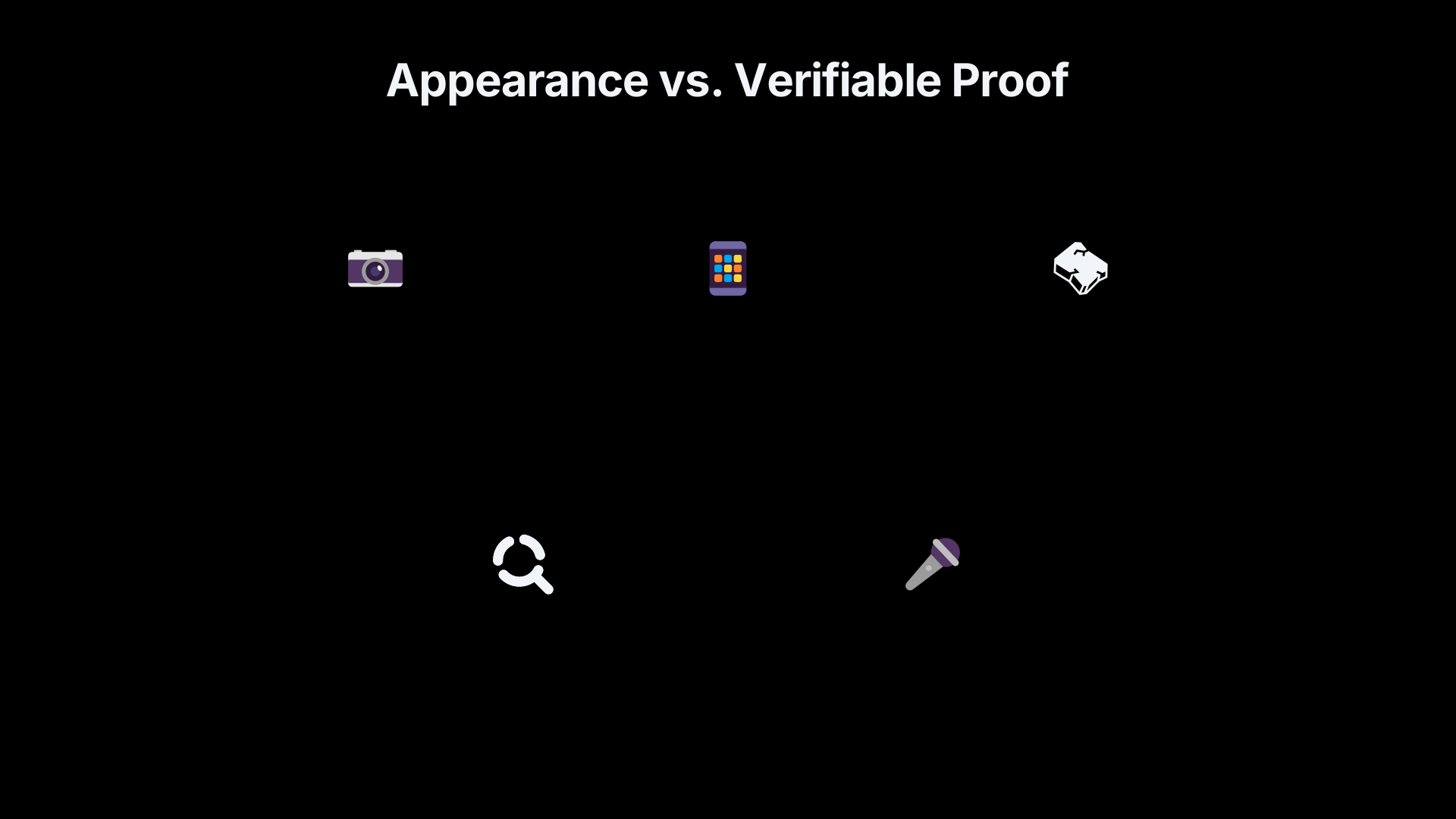
The exposure of major Guatemalan deceptions often came from a shift in investigative method. Instead of asking whether evidence looked convincing, investigators asked whether it could be independently verified.
In the Rosenberg case, investigators examined mobile phone records, surveillance evidence, witness testimony and logistical details surrounding the killing. The investigation focused not on the emotional power of the video but on whether the accusation matched verifiable facts. The resulting reconstruction challenged what many people initially believed because it relied on corroboration rather than appearance.[un.org]un.orgited NationsThe Ultimate Political ConspiracyRodrigo Rosenberg's murder was shocking. He was a lawyer in Guatemala, one of the most dan…
Historians studying the 1954 coup similarly relied on declassified documents, operational records and intelligence archives rather than wartime rumours. These materials revealed how psychological warfare and fabricated reports had been deliberately used to influence perceptions.
Archaeologists confronting claims about Maya prophecies followed the same principle. They compared popular interpretations with inscriptions, translations and the broader context of Maya calendrical systems. The key question was not whether a claim was exciting but whether the evidence actually supported it.
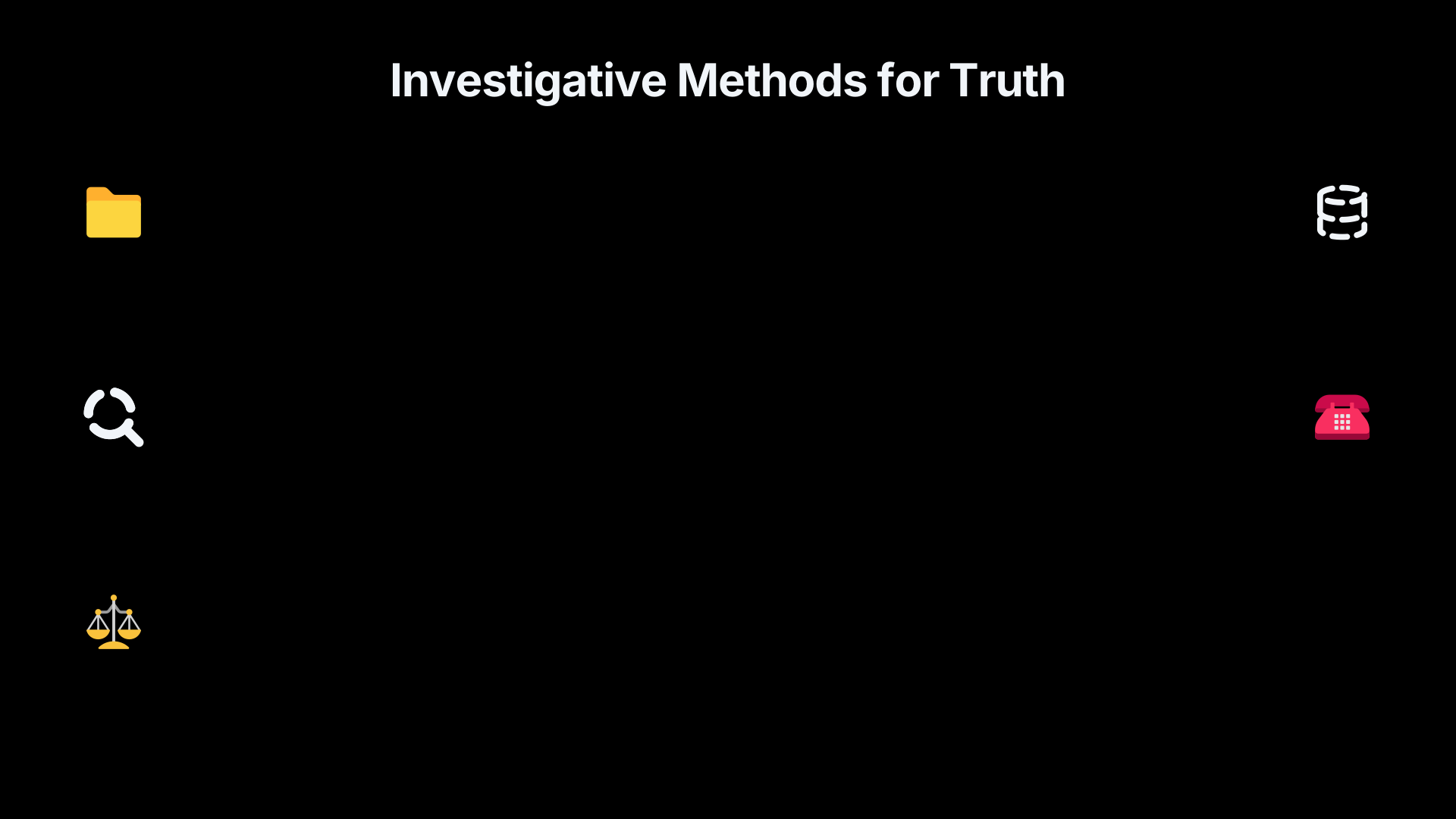
Across these very different cases, the investigative lesson remains consistent:
- Trace information back to its original source.
- Distinguish claims from corroborated facts.
- Ask who benefits from a particular interpretation.
- Look for independent confirmation.
- Treat emotional impact as separate from evidential strength.
These methods often produce conclusions that feel less dramatic than the original story, which is one reason the original story frequently survives.
Why the Stories Continue to Circulate
Even after exposure, many famous Guatemalan falsehoods remain culturally influential.
Part of the reason is narrative power. A secret radio station creating an imaginary rebellion, a murdered lawyer accusing his killers from beyond the grave, or an ancient civilisation supposedly predicting the end of the world are memorable stories. Human beings remember narratives more easily than corrections.
Another reason is that investigations rarely eliminate every uncertainty. Even when a central claim is disproved, debates about motives, context or institutional behaviour can continue. Those unresolved questions create space for alternative interpretations.
Most importantly, the original evidence often remains visible. The Rosenberg video can still be watched. References to Maya prophecies continue to circulate in popular culture. Stories about the 1954 coup are often retold without the full context of the psychological operations involved. The persuasive artefact survives longer than the explanation of why it was misleading.[The Guardian]theguardian.comThe Guardian The truth about Guatemala's You Tube murderThe GuardianThe truth about Guatemala's YouTube murderJanuary 13, 2010 — 13 Jan 2010 — Lawyer Rodrigo Rosenberg accused the Guatemalan pr…
Guatemala’s best-known deceptions therefore reveal a broader truth about belief. False evidence rarely succeeds by looking obviously false. It succeeds by looking familiar, authoritative and emotionally convincing. The lesson is not that people should distrust all evidence. It is that convincing evidence and reliable evidence are not always the same thing.
Amazon book picks
Further Reading
Books and field guides related to Why Convincing Evidence Can Still Be False. Use these as the next step if you want deeper reading beyond the article.
Mistakes Were Made (but Not by Me)
Shows how people defend false beliefs and narratives.
eBay marketplace picks
Marketplace Samples
Live-tested eBay searches with available results related to this page.




Endnotes
1.
Source: theguardian.com
Title: The Guardian The truth about Guatemala’s You Tube murder
Link:https://www.theguardian.com/world/2010/jan/13/guatemala-murder-rodrigo-rosenberg
Source snippet
The GuardianThe truth about Guatemala's YouTube murderJanuary 13, 2010 — 13 Jan 2010 — Lawyer Rodrigo Rosenberg accused the Guatemalan pr...
Published: January 13, 2010
2.
Source: newyorker.com
Title: a murder foretold
Link:https://www.newyorker.com/magazine/2011/04/04/a-murder-foretold
Source snippet
The New YorkerA Murder Foretold28 Mar 2011 — Rosenberg, a highly respected corporate attorney in Guatemala, was certain that he was going...
3.
Source: un.org
Link:https://www.un.org/en/ccoi/ultimate-political-conspiracy
Source snippet
ited NationsThe Ultimate Political ConspiracyRodrigo Rosenberg's murder was shocking. He was a lawyer in Guatemala, one of the most dan...
4.
Source: justiceinitiative.org
Link:https://www.justiceinitiative.org/voices/justice-guatemala-stranger-fiction
Source snippet
Open Society Justice InitiativeJustice in Guatemala: Stranger Than FictionThe story of Rodrigo Rosenberg—a widely respected corporate law...
5.
Source: economist.com
Title: murder foretold
Link:https://www.economist.com/the-americas/2009/05/16/murder-foretold
Source snippet
The EconomistMurder foretold16 May 2009 — The video recorded by Rodrigo Rosenberg, a Guatemalan lawyer, four days before he was shot dead...
Published: May 2009
Additional References
6.
Source: facebook.com
Title: the unofficial laureate of 1980s hedonism on the truths behind his new york nove
Link:https://www.facebook.com/financialtimes/posts/the-unofficial-laureate-of-1980s-hedonism-on-the-truths-behind-his-new-york-nove/1350181597155214/
Source snippet
The unofficial laureate of 1980s hedonism on the truths...Written almost in a single paragraph, the novel is the voice of a failed pries...
7.
Source: youtube.com
Link:https://www.youtube.com/watch?v=yBuoqw7HIYw
Source snippet
A Murder Foretold: The Strange Case of Rodrigo RosenbergThere began a brilliant investigation, a journey into Rosenberg's soul and Guatem...
8.
Source: americasquarterly.org
Title: murder accusations against the guatemalan president the truth comes out
Link:https://www.americasquarterly.org/article/murder-accusations-against-the-guatemalan-president-the-truth-comes-out/
Source snippet
Murder Accusations Against the Guatemalan President14 Jan 2010 — In a country where you can literally get away with murder, Guatemalans w...
9.
Source: pure.uva.nl
Link:https://pure.uva.nl/ws/files/42890281/Thesis.pdf
Source snippet
and peace - UvA-DARE (Digital Academic Repository)6 Dec 2019 — Crime and peace: International interventions to cope with rule of law chal...
10.
Source: Wikipedia
Title: Rodrigo Rosenberg Marzano
Link:https://en.wikipedia.org/wiki/Rodrigo_Rosenberg_Marzano
Source snippet
Rodrigo Rosenberg MarzanoBefore his death, Rosenberg recorded a video message saying if he were murdered, Álvaro Colom Caballeros, Pre...
11.
Source: youtube.com
Link:https://www.youtube.com/watch?v=lLj1x5J1iJs
Source snippet
Operation PBSuccess: Inside The CIA's Hunt for a Terrorist Mastermind...
12.
Source: youtube.com
Title: Operation PBSuccess: Inside The CIA’s Hunt for a Terrorist Mastermind
Link:https://www.youtube.com/watch?v=Vz85iXK5Z3o
Source snippet
The 1954 Guatemalan Coup Part 2 | STUFF YOU MISSED IN HISTORY CLASS...
13.
Source: youtube.com
Link:https://www.youtube.com/watch?v=Wo0uuySjfH4
Source snippet
How The CIA Invaded Guatemala Using A Rebel Army Of 500 Men...
14.
Source: youtube.com
Title: How The CIA Invaded Guatemala Using A Rebel Army Of 500 Men
Link:https://www.youtube.com/watch?v=A_Ho8cQ2ZZE
Source snippet
America's Regime Change Playbook, Explained...
15.
Source: youtube.com
Title: America’s Regime Change Playbook, Explained
Link:https://www.youtube.com/watch?v=ZQCpFX9mTCU
Source snippet
<YOUTUBE_EMBED> [ {...
Topic Tree